Tag Archives: diverse reads

Adaptation: Forget Conspiracy, More Drama!

Adaptation by Malinda LoTerrorism turns to government conspiracy and much, much worse in Adaptation by Malinda Lo. It’s basically a quick-paced teenie-bopper thrill ride.

It explored some interesting concepts (SPOILERS: Birds breaking planes! Genetic testing! Intergalactic hanky-panky!), but in the end the giant conspiracy saga was completely overshadowed by the teen romance. The lesbian teen romance—well, the xenosexual teen romance.

Yes, Adaptation includes a little human-alien romance. It’s not nearly as weird as you think, especially when the aliens look like humans and the human involved had no idea about the alien bit).

But as you can imagine, that part gets really interesting. Especially when the human involved thinks she’s gay. All the while struggling with feelings for her male debate partner. Never mind the lies and betrayal happening with the alien/human lover.

With all that going on it’s a bit anti-climactic when the president fesses up to first contact and Area 51 and all that. Forget the intergalactic conspiracy, I wanted more drama.

And be warned—it’s a trilogy. There’s a fair amount of closure at the end of the first volume, but there are still plenty of questions to be answered.
 

When I Was the Greatest: Overcoming the Stereotypes

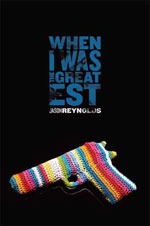
When I Was the Greatest by Jason ReynoldsWhen I Was the Greatest by Jason Reynolds has the gritty, urban feel of Walter Dean Myers, but feels a little more intentional and unique.

It’s the story of a teenager in the hood, trying to stay on the straight and narrow, while still being a teen. It’s a powerful story of family and loyalty that doesn’t descend into the worst of urban stereotypes where everyone gets shot, does drugs and ruins their lives.

Instead it’s about redemption.

I love the character Needles who turns to knitting to control his Tourette syndrome. It’s a realistic coping mechanism and it’s just so wonderfully out of place for these tough urban characters.

Ask the Passengers for Teen Wit & Wonder

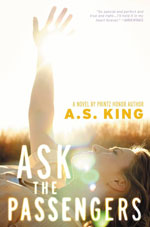
Ask the Passengers by A.S. KingAstrid Jones has never felt safe since moving to a small town. Her mom is image-obsessed, her dad is checked out, her sister is a people pleaser, her best friend lives a double life and, oh yeah, Astrid has a girl friend and hasn’t told anyone she’s gay. Not even herself. Since she can’t confide in anyone, she spends a lot of her time lying on picnic tables, sending her love to random passengers soaring past at 20,000 feet.

In many ways Ask the Passengers by A.S. King is the story of your typical teen finding out who they are, but it’s so well-written and funny and fresh that there’s nothing typical about it. It’s just a beautiful story. I listened to the audiobook and I think that always helps, but it just forged a great connection.

I think that’s the real strength of A.S. King’s writing. Please Ignore Vera Dietz was one of my favorites last year and made my top 10 list (tough competition kept it from going higher). That story had great characters and just pulled you into their real life. Ask the Passengers has the same feel, and it has that great teen wit and wonder.

As you can imagine it explores the many issues raised by coming out and the resulting reaction. Some of that is maddening, but realistic. It also has an interesting take on sexuality, with Astrid’s mother pushing her to have sex but Astrid is looking for love, not just sex. There are some frank and honest discussions about when a teen is ready to have sex. Refreshingly, it’s Astrid doing all the smart thinking, including telling her eager girl friend to back off.

There’s a lot to like about Ask the Passengers and I’ve now added A.S. King to my list of ‘read everything they write’ authors.

More Than This: Weird & Amazing

More Than This by Patrick NessDesperate and depressed, Seth commits suicide and wakes up in an abandoned world. He finds himself inexplicably in his childhood home in England, across the world from where he drowned, and the world is dusty, overgrown and empty. Is he in some kind of hell? This one is weird and deep, but really good as you start diving down the rabbit hole.

And you can hardly say much about More Than This by Patrick Ness without dipping into SPOILER territory. So be warned, cuz that’s where I’m going.

I think the beginning starts off a bit weird. It’s really unclear what’s happening. We get this drowning scene and then quickly learn it was suicide. Then he wakes up in this weird space and it’s familiar but not real. It’s very Twilight Zone. We get flashbacks to his life in dream form, telling us how he got to suicide, including how he blames himself for his brother’s abduction and resulting trauma. Then there’s his secret gay romance that is revealed to the world.

Just when this weird empty world is starting to feel like some kind of metaphysical hell, he runs into other people (it’s about 150 pages in, so it takes a while). Now it really starts getting weird. Ultimately it has a Matrix-like quality where his previous life was a simulation and the empty, abandoned world is reality. It’s a trippy post-apocalyptic story, disguised as a guilt-ridden trip to hell.

How it all plays out is just gripping—I had to start covering up the right side page so I wouldn’t skip ahead. The characters he runs into are also fascinating, well-fleshed and very real.

More Than This is really weird, but it’s pretty amazing. It’s early to call it, but I’d expect to see this one in my top 5 for the year.

Cairo: Ready to Be a Movie

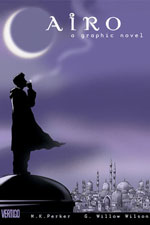
Cairo by G. Willow WilsonI’ve been getting into G. Willow Wilson since the Festival of Faith and Writing and appreciating her unique perspective. Cairo is her first graphic novel and brings together a group of characters that cross paths in the city of Cairo and shape each other’s destinies.

It draws on Middle Eastern mythology and recasts it for a modern age. It’s full of gritty realism and fantastic moments, peppered with comic book wit.

I can picture it as a movie. I suppose that’s natural with the shorter length of a graphic novel and the fact that it’s already visual. But even the story and the characters. It’s unique enough to be a fascinating movie, flipping stereotypes on their head and exploring new legends. Plus it could have a killer ensemble cast.

Chains: Slavery and the Revolutionary War

2014_05chainsIsabel is a slave girl during the American Revolution in Chains by Laurie Halse Anderson, desperately searching for the freedom the rebels are fighting for. But neither the Americans nor the British are willing to grant freedom to a black slave.

It’s an eye-opening perspective on the complications of our Independence.

It reminds me of The Astonishing Life of Octavian Nothing series, especially the second volume when war has broken out and Octavian joins the Brit’s Ethiopian Regiment for the promise of freedom. But Chains is much more direct and approachable. The Octavian Nothing series takes too long to get anywhere.

The American experiment in freedom and democracy is complicated when you realize how wrapped up it is in slavery. The fight for freedom wasn’t limited to the Revolutionary War. It would be nearly a century before blacks in America could taste freedom, and another century before they could truly practice it as equals.

There’s a contradiction at the heart of our nation’s founding that we’re reluctant to face. But it’s there. And 238 years later it still leaves a mark on our culture.

My Name Is Not Easy: Native Injustice & Stupid Ideas

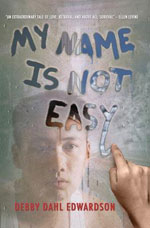
My Name Is Not Easy by Debby Dahl EdwardsonMy Name Is Not Easy by Debby Dahl Edwardson is the loose story of a group of young teens who are white, Indian and Eskimo gathered at a Catholic boarding school in remote Alaska in the 1960s.

It speaks to the hardships and injustices inflicted on the native people, but also follows them as they come of age, deal with tragedy and struggle to find their own voice.

It’s an interesting historical perspective and study of these characters, but the plot lacks direction and focus. It’s more a snapshot of life than a driving story.

Three compelling ideas stuck with me:

  1. “Luke knows his I’nupiaq name is full of sounds white people can’t say. He knows he’ll have to leave it behind when he and his brothers are sent to boarding school.” The theme of the title is subtle throughout the book, but the fact that he goes by Luke throughout the entire book is powerful. It’s also powerful (but still subtle) when he finally does use his name.
  2. Early in the book Luke’s youngest brother, Isaac, is taken away because he’s too young for boarding school. Rather than return to his family, he’s somehow adopted by a family in Texas. While it’s a small part of the story in terms of space (but not theme), it could have been the entire story. It’s unfathomable that something like that could have happened only 50 years ago, but it did.
  3. Many of the stories and circumstances of this book are based on real stories. In addition to the illegal adoption, there was medical testing on natives, a native hunting protest and Project Chariot—a plan to use nuclear bombs to create an artificial harbor nobody needed (a plan that seems comically stupid by today’s standards).

When My Name Was Keoko: World War II Korea

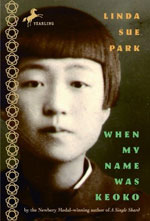
When My Name Was Keoko by Linda Sue ParkWhen My Name Was Keoko by Linda Sue Park is set in occupied Korea during World War II. It follows a brother and sister as the Japanese inflict more and more hardships.

The story itself didn’t blow me away, but the history was a perspective I knew nothing about. I don’t know much about Korean history, so it was fascinating to get this glimpse.

Much of the World War II story we get is the brutality of the Nazis. I’ve heard some about Japanese soldiers, but this viewpoint is more from a civilian point of view as Korea has been occupied by Japan for more than 30 years. The story chronicles many of the ways the Japanese tried to eliminate Korean culture, including banning the language and writing, forced renaming of citizens and even uprooting and burning the national tree of Korea.

The Japanese were working to homogenize their empire, crush the spirit of any resistance and wipe out any unique identifiers that Koreans could take pride in.

With this backdrop it becomes painfully obvious how offensive it is when non-Asians treat all Asians with a broad brush, confusing Koreans for Japanese for Chinese and then dismissing it all as meaningless.

Subverting Expectations in The Butterfly Mosque

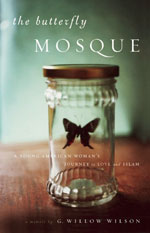
The Butterfly Mosque by G. Willow WilsonAn American woman moves to Cairo in 2003, converts to Islam and marries an Egyptian.

She’s not a terrorist (though the State Department was very interested in her activities).

She’s not an abused and mistreated Muslim wife.

She actually writes for The Atlantic Monthly and Marvel—yes, she writes comic books.

G. Willow Wilson has an incredibly interesting story (one of the many I discovered at the Festival of Faith and Writing) and The Butterfly Mosque is a glimpse into that story. She navigates a new religion and a new culture—effectively entirely new worlds—with poise and grace. She confronts stereotypes and subverts expectations.

But it’s not just a defense of Islam and an attack on America. There are certainly critiques, but Willow works to keep a foot in both worlds. She’s uncomfortable being a bridge between the two, but she takes on the role in the ways she can (such as Ms. Marvel).

It’s a great read. Perhaps my biggest takeaway is that things aren’t always what we expect and no single voice can speak for everyone, whether it’s religion or culture. The Islam we hear about from TV commentators is not the Islam that’s practiced by everyone. There are gradations. There are extremists everywhere.

It’s perhaps most telling when Willow describes tenets of Christianity that I didn’t recognize as my own faith. Ironically, she was pulling from different threads to articulate her rejection of Christianity. It’s the same thing Muslims struggle with when Westerners have a monolithic perspective of Islam that just doesn’t exist in reality.

Overall The Butterfly Mosque is a chance to embrace a diverse viewpoint and find some beauty and commonality despite our differences.

New/Old Asian Superhero: The Shadow Hero

The Shadow Hero by Gene Luen YangThis is fun: Gene Luen Yang is releasing a new retelling of a classic Asian superhero, the Green Turtle.

It’s an exploration of the immigrant experience through the superhero genre, which is essentially all about immigrants and living in two cultures at once. As Gene says:

Superheroes are also about immigrants.  Take at look at Superman, the granddaddy of them all.  His parents sent him to America in search of a better life.  He had two names, one American (Clark Kent) and the other foreign (Kal-El).  He wears two sets of clothes and lives in between two cultures.  He loves his new home, but a part of him longs for his old one.

The character originated in the 1940s and had a short run, but Gene is reviving this forgotten superhero with a new story.

It’s being released as a complete graphic novel this summer, The Shadow Hero, or you can grab digital releases as they come out (#4 of 6 comes out this week).

I discovered Gene Luen Yang earlier this spring thanks to the Festival of Faith and Writing. If his past work is any indication (especially Boxers & Saints and American Born Chinese), this one is going to be worth checking out.