I love coming across examples of awesome, geeky things that do good. Here are two perfect examples:
GoldieBlox
With an engineering degree from Stanford, Debbie Sterling was tired of the boys’ club in her field. 89% of engineers are men. Debbie realized a lot of it has to do with the toys we grow up with. Toys that teach spatial relationships, geometry and building are largely targeted to boys. When they do target girls, it’s usually just by making everything pink. Debbie did some research and discovered that while boys like to build and gravitate toward the Legos, girls like to read.
So she created a toy that combines reading and building to encourage girls to develop those engineering skills. She came up with GoldieBlox, an innovative toy where girls build while reading along with a story.
She invested her life-savings developing the project and brought it to Kickstarter to find some backers. She found more than 5,000 willing partners and raised more than $285,000. GoldieBlox is going into production with an expected delivery date of April 2013.
DJ Focus
Kelvin Doe is a 15-year-old engineering whiz from Sierra Leone. The kid builds his own FM transmitters and power generators out of garbage. Electricity isn’t reliable in Sierra Leone, so Kelvin built his own battery. He broadcasts the news and music as DJ Focus and makes his own mixers with cardboard and spare parts.
Kelvin became the youngest person ever invited to MIT’s Visiting Practitioner’s Program, and had the chance to visit the U.S. and expand his skills. All sorts of opportunities are opening for him now, though this trip was the first time he’d ever been more than 10 miles from home.
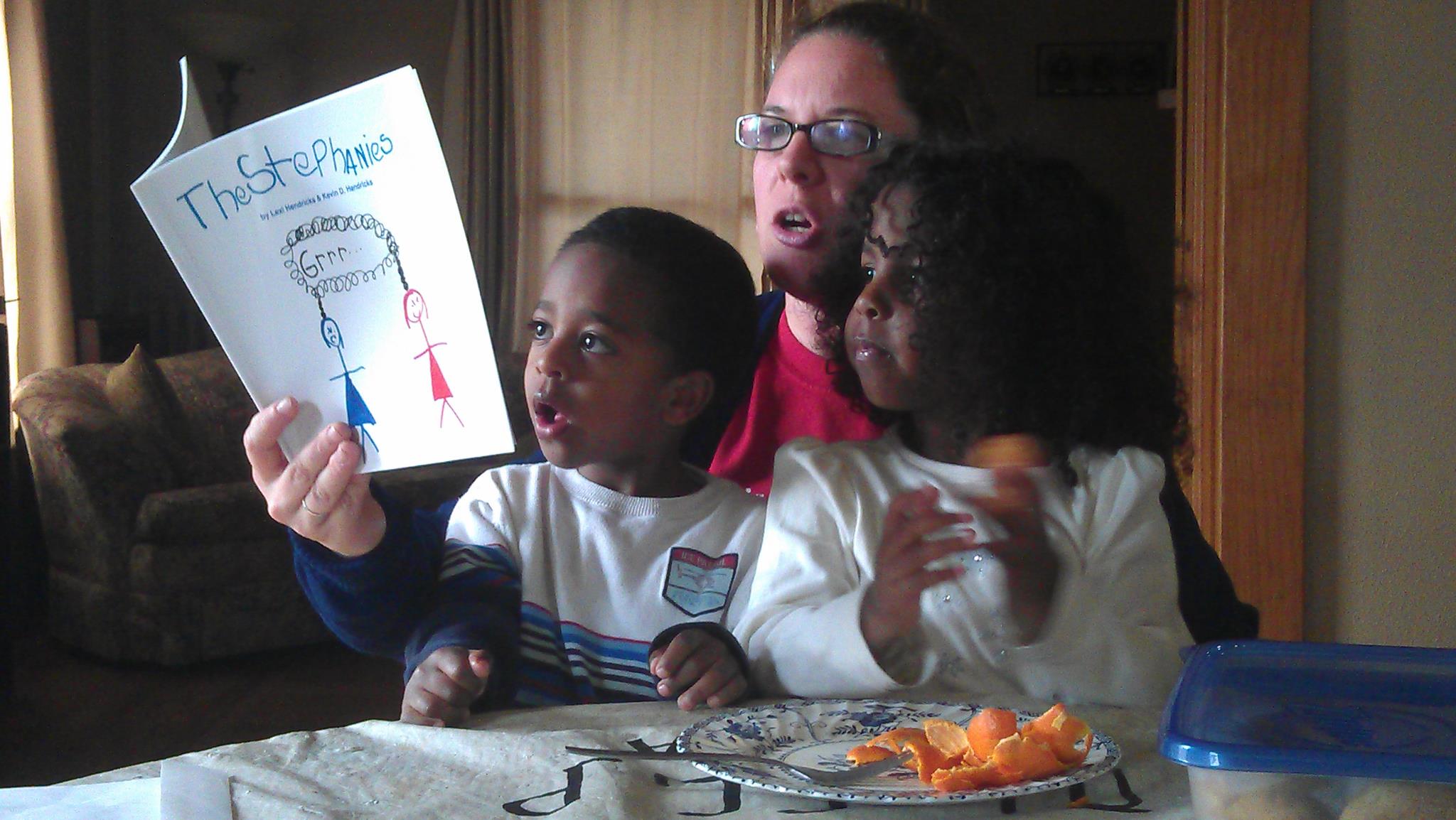
This summer my 6-year-old daughter, Lexi, and I wrote a book: The Stephanies. It was a much-needed summer project and this fall we raised money through Kickstarter to publish it and released it on November 6. A lot of kind folks have applauded this daddy-daughter project, but anyone could do it.
First of all, writing stories is awesome. Kids should have that opportunity to create stories and tell wacky, funny, unique tales. Every kid has these stories and turning them into a published book is just a process.
Old School Publishing
I did this myself as a first grader with my epic masterpiece known as Mike, The Cat. In 1986 we didn’t have print-on-demand publishing technology, so they just handed us a blank book and told us to get to work. That means there’s only one print copy of Mike, The Cat, but it still has a cherished place on my shelf.
That’s one way of making a book. Another way is to simply get crafty, print out your story and create a construction paper cover. In fourth grade I “published” another epic story, Fred and I the Spies, using one of those three-tab folders. You can also go up a notch and take it to a copy place for one of those spiral plastic jobs.
Print-on-Demand Publishing
But today we have new technology that makes it even easier and cheaper to print (and sell!) your book. It’s called print-on-demand publishing and it basically means that they don’t print your book until someone orders a copy. It’s more expensive per copy, but it saves you from having a basement full of books you can’t sell (as awesome as your book is, 79% of books don’t sell more than 100 copies).
We used CreateSpace for The Stephanies, a service of Amazon that I’ve used before. They have reasonable royalty rates, you don’t have to pay up front (this is big; you shouldn’t have to pay to publish your book—you should only pay for the copies you buy) and best of all the book goes on Amazon, which is really the only place you need to be.
The process was pretty easy: Lexi drew the pictures and I scanned them, doing some basic resizing and very minor photo-retouching in Photoshop. Then I did the layout in Microsoft Word and created the cover in Photoshop. I uploaded both files to CreateSpace and that’s about it. They have an online proofing option and you can also order a proof copy (highly recommended). Keeping the design simple helped. The more complicated you get, the more things can go wrong.
Digital Publishing
So far The Stephanies has sold more digital copies than print copies. Creating a digital version is even easier. I used Pages to create an epub file, uploaded that along with a cover to Amazon’s digital publishing site and it’s available on the Kindle. Digital is a little more complicated than print since the text size and screen size can vary wildly depending on the device. Basically it means you lose a lot of control for how the final product looks and that can be hard with a picture book. But it seems to work well enough.
An Easier Way?
If that all sounds a little complicated, don’t worry. You can also check out Scribble Press. It’s a fun way to create and publish your own books online or using an iPad (though you can’t sell them—you can just share them and order print copies). They also have fun templates and fill-in-the-blank stories if you need help getting started.
Most of us just flush it down the toilet, but a group of four girls in Africa turned urine into electricity. 14-year-olds Duro-Aina Adebola, Akindele Abiola, Faleke Oluwatoyin, and 15-year-old Bello Eniola created the project for the recent Maker Faire Africa in Lagos, Nigeria.
So how’s it work? Basically they use a few different chemical processes to extract and purify the hydrogen from the urine and then use the hydrogen to fuel a standard generator.
One liter of urine equals six hours of power. QED.
Earlier this week we officially released The Stephanies, the book my 6-year-old daughter and I wrote together. We’ve been having fun spreading the word, adding new options (you can now download PDF & ePub files) and seeing the reaction the book is getting.
Here’s a sample:
“The kids and I were walking around saying, ‘My name is Stephanie! No MY name is Stephanie! Grrr….’ the rest of the afternoon. It’s a really cute book—made me LOL more than once.” -Victoria VanZile
Ariah Fine says this photo was taken 10 minutes after the book arrived: “They loved it and are inspired to write their own.”
I did a Kickstarter campaign last month to publish a book my daughter and I wrote together (now available!). I think platforms like Kickstarter are awesome, but only if you know how to use them. There are a lot of amazing stories about creative projects being, well, kickstarted with huge piles of funding thanks to Kickstarter. But you don’t hear the stories of all the failed projects that didn’t quite get there.
I’ve done both, a failed project about Como Park and a successful campaign for The Stephanies. Here’s what I learned about Kickstarter:
What’s the Project?
You need to have a clear, simple description of the project you’re going to do. Give us details: Who are you, why are you the person to create this, why is it worth doing, why do you need Kickstarter, etc. I’m shocked at how many people just throw up an idea and expect money to pour in. Doesn’t work that way. Show me what you’re going to do and how you’re going to get there. You should put enough sweat into the project before Kickstarter that I can see it coming to life. I’m investing in an idea. I’m not investing in you coming up with an idea.
Goals
Keep your goal realistic. If you don’t hit your goal you get nothing. But you can always go over your goal. What’s the bare minimum you’d do this project for? That’s your goal. Don’t put in lots of extra cushion room. Keep that goal attainable. The goal for The Stephanies was $300 in 30 days. Easy. Also, keep that time frame short. 30 days should be the max. We hit our goal for The Stephanies in three days.
Rewards
Rewards are huge, but easy to do wrong. Keep the rewards simple and don’t offer too many. Don’t make me choose rewards because one has the format I want and one doesn’t. Also, make sure they’re packed with value—these are your early supporters, willing to back you when no one else will. So treat them like insiders, not donors to milk. It kills me when I see Kickstarter projects I’d love to back but they’re asking $25 for an ebook. Seriously? I promised my backers they were getting the cheapest possible price. Be sure to offer something awesome for $1. My most popular reward was the digital copy for $1. It brought in the least amount of money but the most people (build your audience!). It builds a buzz and lowers the cost of entry. Also offer some cool high-end prizes. Well over half our income came from the $50 and up rewards. This is a way to reward your uber-fans with some cool stuff.
Video
Your video is important. Everybody talks about this, but I think it’s over-rated. Do a good job with the video, make it professional and tell your story. But if that’s you sitting in front of the camera, don’t sweat it.
Kickstarter is awesome. If you do it right. Do you have a project needing a kickstart?
Presidential election night is such a nervous, glorious mishmash of emotions. I can think of no other event when something so big is decided so quickly. Sure, the election drags on forever, but despite the polls you never know for sure who’s going to win. Then everybody votes, we tally ’em up while some talking heads blather on, and it’s decided (usually: thank goodness for not repeating 2000). Done. The next four years are in place. History is written.
It’s big.
I have a hard time getting anything done on election day (that’s why I turned to a distraction). Even today I’ll need to process for a while (and I’m doing that here… get ready for a long post). Continue reading 2012 Election Reflection→
All the wild frenzy of the U.S. presidential election comes down to today. I’ve been bloggingabout it almostnon-stoplately, but today it’s time to shut up and go vote. And then spend the rest of the day in a state of unnerved distraction, trying not to reload your favorite news site every 10 minutes (oh wait, is that just me?).
So today I’m launching an election distraction: The Stephanies is now available. You can go buy the print version, the digital version or the “color-your-own” version where you (or your kid) can be the illustrator.
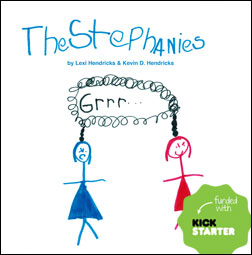
The Story The Stephanies is a short, goofy little story about two girls who are both named Stephanie. Sharing a name causes all kinds of problems and the two girls continually square off:
“My name is Stephanie!”
“No, my name is Stephanie!”
“Grr…” both girls grumbled.
It’s great fun. If you’re into children’s books, think more Robert Munsch than Margaret Wise Brown. This is the book my 6-year-old daughter and I wrote together and then published through a successful Kickstarter campaign.
Good Cause
Proceeds from the original Kickstarter campaign went to Lexi’s college fund, but for the month of November we’re going to share. Half the profits from The Stephanies will go to First Book, an organization that gives kids in need access to books.
Thanks & Please Review
I’d be remiss if I didn’t send out a big thank you to everyone who backed our Kickstarter campaign and made this project possible. Thank you!
I hope you’ll check out the book, give it a review on Amazon and tell your friends. Thanks!
In the midst of the political season I find myself wavering between complete fascination with the political process and utter dread that it will never be over. Facebook usually only encourages the latter, but earlier this year I noticed something interesting. I recently found my long lost high school writing teacher, Janice Mekula Golding, on Facebook. When she wasn’t posting about glorious retirement in Grand Traverse County, Michigan, she was talking about going door-to-door and canvassing for the election.
A political door knocker? Yikes. I hate it when those people come to my door.
But then I started wondering: Why does she do it? Does it actually work? How many people actually listen and how many slam the door? Seemed like an opportunity to learn a bit about the world of volunteer political campaigning. I found it fascinating and encouraging. Maybe next time I’ll actually listen to the political campaigner who knocks on my door.
OK, let’s start with the basics: Who are you going door to door for? How often have you done it?
Janice Mekula Golding: I’m currently going door-to-door for the Democratic candidate for Michigan House in Grand Traverse County, a peripatetic little Energizer Bunny named Betsy Coffia. I got my training in 2007-2008 as a full-time volunteer for Barack Obama in 13 states, where I probably knocked 200 to 400 doors per day, 10-15 times per month. My current campaign has held a canvass at least every other week since June, with a different purpose each time.
Why? Why door knocking as a political strategy?
Janice: Door-knocking is as old as campaigning itself, based on the principle that one smile is worth a thousand brochures or a hundred phone calls. The benefit of the personal testimonial is well known in advertising. If your neighbor raves about her new dentist, you’ll be more likely to go there than if you read about it on the Internet.
What does it look when you’re going door to door? What do you say to people? What are you hoping to get them to do?
Janice: The experience of going door-to-door varies from day to day, depending on the neighborhood and the campaign objective. A new candidate will need to gauge and/or establish name recognition: “Hi, I’m Jan from over in the Old Mission neighborhood. Have you heard of that awesome new woman who’s challenging Wayne Schmidt for State Rep in our district?” We record the answers on a check sheet to be entered into our computer database for analysis and appropriate strategizing. Another canvassing session may concentrate on determining which issues are most important to voters, and clarifying our candidate’s position on those issues, even offering to research the topic and report back or have the candidate give the voter a call (in a small, local race). Later in a campaign, the goal is ensuring that our friendlies are registered and know where and when to vote. In training, we emphasize to our volunteers that door-knocking is merely sharing our enthusiasm and personal stories with neighbors (or fellow concerned citizens, if we’re out of our own locality). Often, the most effective political strategy is simply to listen. Believe it or not, most people are receptive or at least polite. Especially when it’s raining.
Is this actually effective? Are you changing people’s minds?
Janice: This technique can be highly effective, if organized correctly. Preparation and training are key. If the campaign has access to a database of voter information, certain demographics can be targeted in advance (registered Democrats or Independents, age range, those who voted in recent primaries, those who pledged to vote for us, etc.). Volunteers must be familiarized with the candidate’s background and positions, the objective of the particular canvass, and principles of safety. Often, a canvasser’s job is not to change minds, but to disseminate and collect information.
Janice: Door-knocking horror stories abound, from unleashed dobermans to unleashed racists. One of my colleagues was tackled to the turf by a 6-foot tumbleweed in Butte, Mont.! My personal favorite was the home sporting a poster of gun sight cross hairs reading, “If you can read this—you are in range.” Needless to say, I backed off that porch. Slowly. With my hands up.
What was your best door knocking experience?
Janice: Best experiences? I couldn’t pick just one! From the Massachusetts voter who left me with a bag of Granny Smith apples and a home-baked pie, to the disabled man who told me tearfully that no candidate had ever sent a canvasser deep into his wooded cabin to ask his opinion about handicap access problems in Keene, N.H., to the Texas senior citizen with an oxygen tank at her side, a lit cigarette dangling from her lips, and a hyper-kinetic poodle who liked his dog biscuits pre-chewed, door-knocking is one of the most rewarding and humbling experiences of my life. (And yes, I did pre-chew. Hey, she was busy filling out her absentee ballot for Barack Obama.)
What has all that door knocking accomplished?
Janice: What have all of our blisters accomplished? Well, Betsy Coffia went from a social worker with a 4.5 percent name recognition to the landslide winner of the Democratic primary, over a candidate backed by the county Democratic Party. And oh yeah—there’s that guy in the big house on Pennsylvania Avenue…
With the election just days away I’m getting lost in the many fascinating layers of presidential politics. Two are especially fun: the possibility of a tie and the way the electoral college works.
It’s a Tie!
First up, the New York Times has a neat little map showing the 512 possible outcomes in the presidential election based on nine battleground states (don’t you just love how the other 41 states are a foregone conclusion?). Of those potential paths, 421 lead to an Obama victory, 76 to a Romney victory and five to a tie.
That’s right, all this campaigning and we could end up with a tie.
But don’t worry, the 12th amendment addresses such a possibility. The House of Representatives gets to pick the president (but with an odd, one vote per state delegation rule) and the Senate picks the vice president. Based on which parties control which chambers, we’d most likely end up with President Mitt Romney and Vice President Joe Biden. Now there’s a wacky pair.
But the 12th amendment isn’t actually that simple. It not only speaks to a tie, but a case where no one gets a majority of the electoral votes. This scenario happens when there are more than two parties winning electoral votes. It’s only happened once in history, 1824, when Andrew Jackson received 99 electoral votes, John Quincy Adams got 84, William H. Crawford got 41 and Henry Clay got 37, all shy of the 131 needed at the time. Based on the complex rules of the 12th amendment, the top three electoral vote getters can be considered by the House, so Clay was out. He threw his support to Adams, and the House eventually elected Adams as president.
Upside Down Victory
Which brings us to the other wacky issue with our presidential election system: the details of the electoral college. As you probably remember only vaguely, the president is not chosen by a simple majority of citizens, but by the electoral college, a bizarre quirk of representational democracy where we don’t vote for a candidate but for people who will vote for a candidate. It’s left over from the days when we didn’t trust the common citizen. Hmm…
Each state has a certain number of electors and the winner of a state gets all the electoral votes for that state. It’s all or nothing. Which means the popular vote is practically meaningless. This is where it gets crazy.
A fun little video details how the electoral college works and showcases that someone could win the presidency with only 22% of the popular vote. All it takes is winning in a bunch of small states by a single vote. That’s right, more than three-fourths of the nation could vote against someone and they could still win the presidency. Watch it for yourself:
But surely that won’t happen, right? As the election of 2000 has shown us, anything can happen. Thankfully, we’ve been through it in recent history and the country didn’t come apart at the seams.
What About Popular Vote?
Oddly enough, we also weren’t motivated to change our system. Frankly, it seems like a straight popular vote might be simpler. It sure would have made social studies class a lot easier. It also might result in more equitable campaigning with candidates visiting all states and not just the swing states. The National Popular Vote Interstate Compact is one attempt to do away with the popular vote over the electoral system and the Wikipedia article includes plenty of pros and cons. The method they use is even more complicated though, relying on the fact that state legislatures decide how their electoral votes are cast, so the compact says that when a majority of states sign on, they will assign their electoral votes based on the popular vote, regardless of the result in their own state. Seems like it’d be easier to just pass a Constitutional amendment, like the Every Vote Counts Amendment, though it doesn’t seem to be going anywhere.
Sheesh. Presidential elections are way too complicated. Is it Tuesday yet?
I’ve tried (at length) to write about the marriage amendment in Minnesota without success. I did manage to write about how their language offends me (since then I’ve seen ads touting “real” marriage?!), but I haven’t written directly about the amendment. I’ll try now (and it’s my last “here’s where I stand” post of the election cycle, I swear).
For all the articles I’ve read and back and forth arguments I’ve considered (enough to make your head spin), I think this is the strongest issue for me (and it stands regardless of your views on homosexuality).
“This is not an amendment to Christianity. It is an amendment to the Minnesota State Constitution. We live in a pluralist society, not a theocracy. So while it may be important for Christians to debate Christian perspectives on marriage, it is not fair to force all Minnesotans to have the same ideals. Whether we like it or not, not all Minnesotans are Christians. Forcing religious ideals on non-believers is a violation of the separation of church and state. And, to use Alexis de Tocqueville’s words, it is a tyranny of the majority. What happens when the majority of Minnesotans are no longer Christian? Are we willing to accept the precedent this amendment sets – that the dominant religion can force their beliefs into law? If not, we suggest voting NO.”
Thank you for putting words to the argument I’ve been having in my head for the last decade.
I think it’s sad that this whole issue is about protecting the sanctity marriage from people who want to get married. Meanwhile few are protecting the sanctity of marriage from the ones already married and getting divorced. If you want to be pro marriage, put your effort into helping marriages, not passing laws.
A work-at-home dad wrestles with faith, social justice & story.