All posts by Kevin D. Hendricks

Crackpot or Genius?

It’s the essential question of life: Crackpot or genius?

So this Ph.D. in economics, Mark White, has this idea that museums could sell shares in their artwork to raise money. It’s this bizarre, crazy idea to somehow monetize the holdings of museums and give them new access to capital without selling everything off. The idea was being discussed because the Detroit Institute of Arts might be desperate enough to try it.

At the end of the article, White has the best quote ever:

Innovators, he points out, are frequently wrong. “I could be a crackpot,” he said, in a telephone call. “But I think I’m a genius.”

Don’t we all? How often do we have these ideas that are either brilliant or horrible? Maybe they’re both, depending on who you ask (one person’s crackpot is another person’s genius). And maybe when you ask. It’s such a great sentiment, acknowledging the reality of ourselves: Yeah, I could be a little nuts. But I prefer to think of myself as brilliant.

And perhaps that’s what separates the crackpots from the geniuses. If you never push your idea, if you never pursue it, if you never put in the hardwork to make it a reality, then you’re just a crackpot. But if you put in the time, the sweat, the energy—then maybe you are a genius.

I could be a crackpot. But I think I’m a genius.

Donate to Clean Water, Get a Free Book

Clean Water for EliroseClean Water for Elirose is a great little children’s book explaining the problem of dirty water around the world. I plugged the book before when it was a Kickstarter project and now the author, Twin Citizen Ariah Fine, is working hard to fund a clean water well. He’s trying to raise $5,000 through charity: water, a task I know well, and he’s offering to give a copy of Clean Water for Elirose for donating any amount to his charity: water project.

That’s a great deal: Give clean water, get a free book.

If you already have a copy (like me!) or don’t need one, Ariah will give your free copy to a classroom.

You can check out the book and read the entire thing online.

Consider making a donation. charity: water does amazing work and it’s always worthwhile supporting them. Plus: good book. Book projects like this definitely need to be supported and generous souls like Ariah who put so much sweat and tears into a project and then give it all away deserve your support.

Here’s a great video of Ariah’s kids getting ready to give away some books:

Stephanies & First Book Update

Screenshot of donation confirmation page on First Book's site.We launched The Stephanies last month and promised to share half our profits for the month of November with First Book. November is done and gone (and with it all those great Movember mustaches!) so it’s time to tally our sales and make a donation.

We sold a whopping 7 print copies and 8 digital copies, for a grand total of $30.38 in royalties. So we’ll make a donation to First Book for $15.19. Doesn’t sound like much, but it will provide six new books to kids in need. That’s pretty cool. Thanks to everyone who bought a copy!

Those sales can be combined with the 36-some odd sales from our Kickstarter campaign and that’s pretty great for a self-published book written by a 6-year-old. How many books did you sell as a first grader? I’ve got a big ol’ nothing in that count. Creating this book, sharing it with the world and giving back in a tiny little way has been pretty awesome. The numbers don’t sound like much, but we weren’t in it for the numbers.

More than anything I had a blast doing it with Lexi. I now owe Milo a book project of his own. And this is a great test case for how kids can make their own books (not to mention how to use Kickstarter).

While we’re no longer donating our profits (we’ll now siphon the cash straight to Lexi’s college fund), you’re welcome to grab your own copy of The Stephanies. We’ve got the original paperback, a “Color-Your-Own” paperback, and digital versions for the Kindle, iBook & Nook, and the standard PDF version. It’s a great little gift for the kid in your life, no matter how old they are.

The Stephanies & First Book

I Support First BookTomorrow is your last chance to grab a copy of The Stephanies and support First Book. We’re sharing half our profits from the month of November with First Book, and with tomorrow being the last day of the month, it’s your last chance.

First Book is an organization that gives kids in need access to books. What’s so great about books? Aside from being awesome, literacy is the best predictor of a child’s future success. If they can read, they’re more likely to do better in life. The biggest barrier to literacy is not having access to books. It’s kind of a simple—if a kid can’t get easy access to a book, they’re not going to learn how to read.

So First Book is about giving kids that first book, giving them access to books so they can learn how to read so they can do better in life. It’s simple, but it’s awesome.

For $10 they can donate four new books, so hopefully we’ll be able to give a few books. It’s kind of cool to not only write a book, but to help others learn how to read books.

The idea of not having books is kind of unfathomable to me. We have literally thousands of books in our house. The kids both have at least a hundred books in their rooms. We like books. I hope in some small way we can pass on that love.

So if you haven’t done it yet, grab a copy of The Stephanies. We’ve got the original paperback, a “Color-Your-Own” version, and digital versions for the Kindle, iBook & Nook, and the standard PDF version. We’ll donate 50% of the profits to First Book.

Thanks.

Make Your Own Antenna

Antenna built from cardboard and tin foil
I built my own antenna!

This week we upgraded to the flat panel, digital age and got a new TV with some Christmas money (yes, our family celebrates multiple Christmases between Thanksgiving and New Year; one down, at least two to go). We finally replaced the old school 21″ TV we got as a wedding present and got a fancy LED HD 720 something or other.

As fancy as the new TV was, it didn’t get actual TV.

This wasn’t really a problem. When we rearranged, the TV was on the opposite wall as the cable outlet and we never  cared. That’s how little we watch regular TV.

But with a fancy new TV it seemed like we should be able to watch regular TV (without draping a cable across the room). Apparently you need an antenna to get regular TV, even with a fancy new TV. As I started researching antennas online I stumbled across some instructions for a DIY antenna. The site claims it works as good as the fancy ones you can buy in the store, so I figured why not.

A cardboard and tinfoil antenna? That sounds cool.

And it totally works. I bought the required $1.78 part this morning and slapped it together this afternoon. And we’ve got regular TV! Not just regular TV, but HDTV with all kinds of weird extra channels. Cool. It comes in great. I’d wager just as good as anything we bought at the store.

Gotta love the juxtaposition of the high tech TV and a piece of cardboard junk. Sometimes spending more money isn’t always better. Now I just need to find a place to hide the cardboard antenna so it doesn’t look as ridiculous as a cable strung across the room.

My last cardboard project worked pretty good, too (until somebody threw up on it). For my next cardboard project, I’m thinking of tackling this.

Teaching Technology

I love coming across examples of awesome, geeky things that do good. Here are two perfect examples:

GoldieBlox
With an engineering degree from Stanford, Debbie Sterling was tired of the boys’ club in her field. 89% of engineers are men. Debbie realized a lot of it has to do with the toys we grow up with. Toys that teach spatial relationships, geometry and building are largely targeted to boys. When they do target girls, it’s usually just by making everything pink. Debbie did some research and discovered that while boys like to build and gravitate toward the Legos, girls like to read.

So she created a toy that combines reading and building to encourage girls to develop those engineering skills. She came up with GoldieBlox, an innovative toy where girls build while reading along with a story.

She invested her life-savings developing the project and brought it to Kickstarter to find some backers. She found more than 5,000 willing partners and raised more than $285,000. GoldieBlox is going into production with an expected delivery date of April 2013.

While the Kickstarter project is over, you can still pre-order GoldieBlox.

If you’re not convinced, see what 5-year-old Riley has to say about GolideBlox. You may remember Riley as the girl who went on a rant in the toy aisle about all the pink princesses for girls, racking up more than 4 million views.

DJ Focus
Kelvin Doe is a 15-year-old engineering whiz from Sierra Leone. The kid builds his own FM transmitters and power generators out of garbage. Electricity isn’t reliable in Sierra Leone, so Kelvin built his own battery. He broadcasts the news and music as DJ Focus and makes his own mixers with cardboard and spare parts.

Kelvin became the youngest person ever invited to MIT’s Visiting Practitioner’s Program, and had the chance to visit the U.S. and expand his skills. All sorts of opportunities are opening for him now, though this trip was the first time he’d ever been more than 10 miles from home.

Learn more about Kelvin or just watch the video:

How Kids Can Create Their Own Books

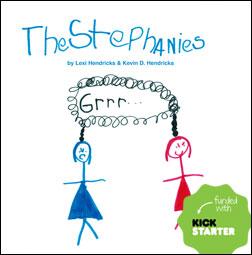
Working on the StephaniesThis summer my 6-year-old daughter, Lexi, and I wrote a book: The Stephanies. It was a much-needed summer project and this fall we raised money through Kickstarter to publish it and released it on November 6. A lot of kind folks have applauded this daddy-daughter project, but anyone could do it.

First of all, writing stories is awesome. Kids should have that opportunity to create stories and tell wacky, funny, unique tales. Every kid has these stories and turning them into a published book is just a process.

Old School Publishing
I did this myself as a first grader with my epic masterpiece known as Mike, The Cat. In 1986 we didn’t have print-on-demand publishing technology, so they just handed us a blank book and told us to get to work. That means there’s only one print copy of Mike, The Cat, but it still has a cherished place on my shelf.

That’s one way of making a book. Another way is to simply get crafty, print out your story and create a construction paper cover. In fourth grade I “published” another epic story, Fred and I the Spies, using one of those three-tab folders. You can also go up a notch and take it to a copy place for one of those spiral plastic jobs.

Print-on-Demand Publishing
But today we have new technology that makes it even easier and cheaper to print (and sell!) your book. It’s called print-on-demand publishing and it basically means that they don’t print your book until someone orders a copy. It’s more expensive per copy, but it saves you from having a basement full of books you can’t sell (as awesome as your book is, 79% of books don’t sell more than 100 copies).

We used CreateSpace for The Stephanies, a service of Amazon that I’ve used before. They have reasonable royalty rates, you don’t have to pay up front (this is big; you shouldn’t have to pay to publish your book—you should only pay for the copies you buy) and best of all the book goes on Amazon, which is really the only place you need to be.

The process was pretty easy: Lexi drew the pictures and I scanned them, doing some basic resizing and very minor photo-retouching in Photoshop. Then I did the layout in Microsoft Word and created the cover in Photoshop. I uploaded both files to CreateSpace and that’s about it. They have an online proofing option and you can also order a proof copy (highly recommended). Keeping the design simple helped. The more complicated you get, the more things can go wrong.

Digital Publishing
So far The Stephanies has sold more digital copies than print copies. Creating a digital version is even easier.  I used Pages to create an epub file, uploaded that along with a cover to Amazon’s digital publishing site and it’s available on the Kindle. Digital is a little more complicated than print since the text size and screen size can vary wildly depending on the device. Basically it means you lose a lot of control for how the final product looks and that can be hard with a picture book. But it seems to work well enough.

An Easier Way?
If that all sounds a little complicated, don’t worry. You can also check out Scribble Press. It’s a fun way to create and publish your own books online or using an iPad (though you can’t sell them—you can just share them and order print copies). They also have fun templates and fill-in-the-blank stories if you need help getting started.

Do you have a book you want to publish?

African Girls Create a Piss-Powered Generator

Most of us just flush it down the toilet, but a group of four girls in Africa turned urine into electricity. 14-year-olds Duro-Aina Adebola, Akindele Abiola, Faleke Oluwatoyin, and 15-year-old Bello Eniola created the project for the recent Maker Faire Africa in Lagos, Nigeria.

So how’s it work? Basically they use a few different chemical processes to extract and purify the hydrogen from the urine and then use the hydrogen to fuel a standard generator.

One liter of urine equals six hours of power. QED.

Here are some more pics of the project from the Maker Faire Africa blog.

Other cool projects at the Maker Faire Africa? Yes please: How about hydraulic toys created by a 15-year-old?

Reaction to The Stephanies

Earlier this week we officially released The Stephanies, the book my 6-year-old daughter and I wrote together. We’ve been having fun spreading the word, adding new options (you can now download PDF & ePub files) and seeing the reaction the book is getting.

Here’s a sample:

  • “The kids and I were walking around saying, ‘My name is Stephanie! No MY name is Stephanie! Grrr….’ the rest of the afternoon. It’s a really cute book—made me LOL more than once.” -Victoria VanZile
    Victoria reads The Stephanies to her kids.
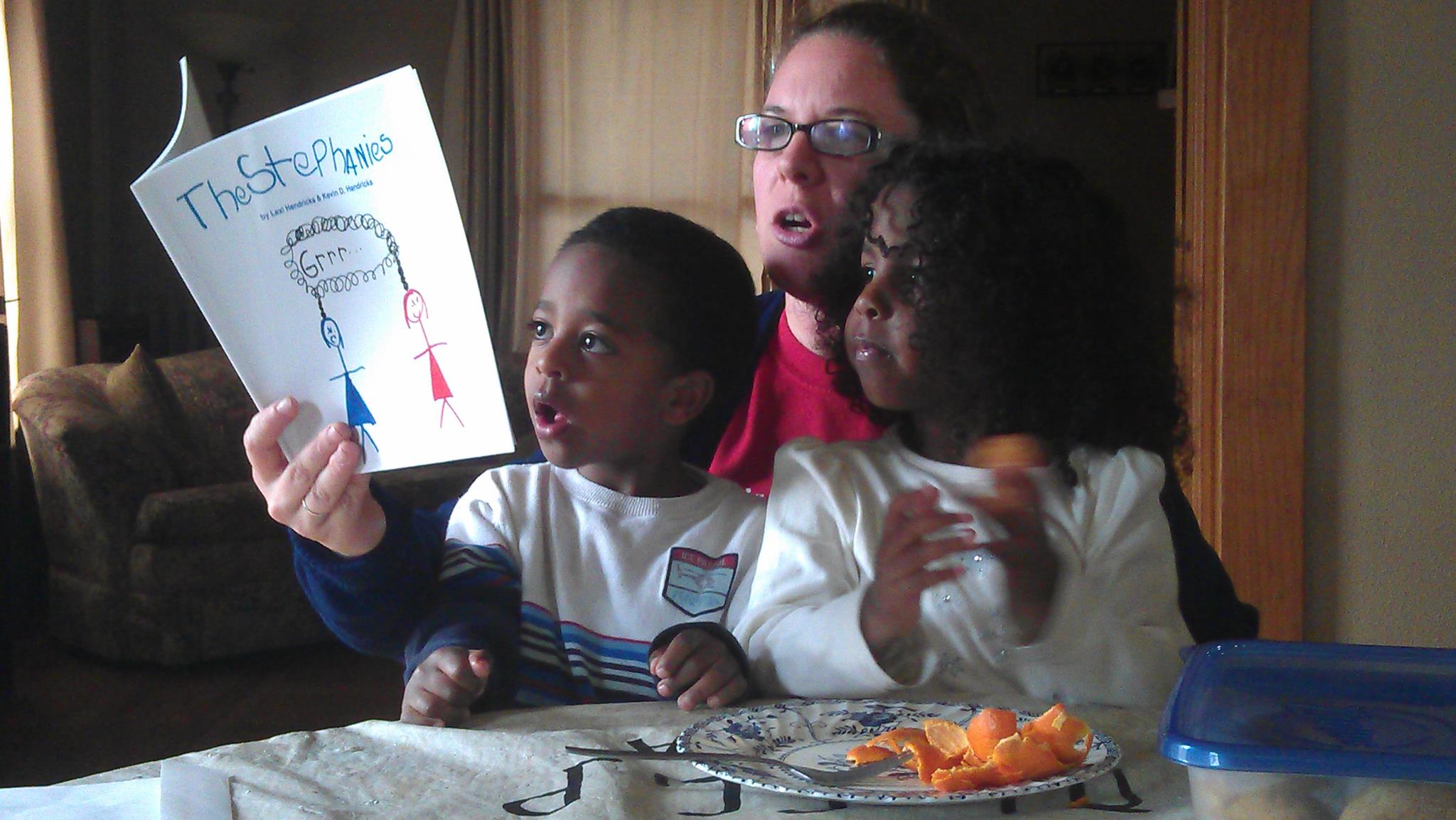
  • Ariah Fine says this photo was taken 10 minutes after the book arrived: “They loved it and are inspired to write their own.”
    Ariah reads The Stephanies to his kids.
  • Video review by 5-year-old Aryn:
  • “Imagine my delighted surprise to find myself laughing out loud with sheer joy. Out loud. Laughing. Really!” –Meredith Gould
  • “Telling other children that ‘this book was written by a girl just like you’ can be empowering.” –Bookwi.se
  • “Great reading for a great cause.” –Christa Banister

http://twitter.com/jwenell/status/265861981515436032

How to Make the Most of Kickstarter

I did a Kickstarter campaign last month to publish a book my daughter and I wrote together (now available!). I think platforms like Kickstarter are awesome, but only if you know how to use them. There are a lot of amazing stories about creative projects being, well, kickstarted with huge piles of funding thanks to Kickstarter. But you don’t hear the stories of all the failed projects that didn’t quite get there.

I’ve done both, a failed project about Como Park and a successful campaign for The Stephanies. Here’s what I learned about Kickstarter:

What’s the Project?
You need to have a clear, simple description of the project you’re going to do. Give us details: Who are you, why are you the person to create this, why is it worth doing, why do you need Kickstarter, etc. I’m shocked at how many people just throw up an idea and expect money to pour in. Doesn’t work that way. Show me what you’re going to do and how you’re going to get there. You should put enough sweat into the project before Kickstarter that I can see it coming to life. I’m investing in an idea. I’m not investing in you coming up with an idea.

Goals
Keep your goal realistic. If you don’t hit your goal you get nothing. But you can always go over your goal. What’s the bare minimum you’d do this project for? That’s your goal. Don’t put in lots of extra cushion room. Keep that goal attainable. The goal for The Stephanies was $300 in 30 days. Easy. Also, keep that time frame short. 30 days should be the max. We hit our goal for The Stephanies in three days.

Rewards
Rewards are huge, but easy to do wrong. Keep the rewards simple and don’t offer too many. Don’t make me choose rewards because one has the format I want and one doesn’t. Also, make sure they’re packed with value—these are your early supporters, willing to back you when no one else will. So treat them like insiders, not donors to milk. It kills me when I see Kickstarter projects I’d love to back but they’re asking $25 for an ebook. Seriously? I promised my backers they were getting the cheapest possible price. Be sure to offer something awesome for $1. My most popular reward was the digital copy for $1. It brought in the least amount of money but the most people (build your audience!). It builds a buzz and lowers the cost of entry. Also offer some cool high-end prizes. Well over half our income came from the $50 and up rewards. This is a way to reward your uber-fans with some cool stuff.

Video
Your video is important. Everybody talks about this, but I think it’s over-rated. Do a good job with the video, make it professional and tell your story. But if that’s you sitting in front of the camera, don’t sweat it.

Kickstarter is awesome. If you do it right. Do you have a project needing a kickstart?