The Last Wild: All Imagination, All Rise

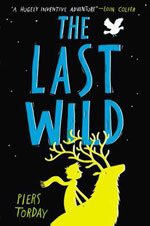
The Last Wild by Piers TordayThe Last Wild by Piers Torday gives us a post-apocalyptic world where the red-eye virus has killed nearly all the animals. Save for a few holdouts, humanity has been pushed into cities and subsists on a synthetic formula.

It’s a bleak setup for a children’s novel. But it gets worse.

Kester Jaynes is trapped in a home for troubled children because he stopped talking six years ago. There’s your rejected outcast hero.

But then some of the remaining animals start talking to him, including a flock of pigeons and a fighting cockroach. They break him out and the adventure begins, a journey to cure the virus and save the last remaining animals.

It’s very British.

Kind of a post-apocalyptic Narnian adventure. I give it kudos for imagination (and a killer cover). The middle-grade post-apocalyptic story is quite a challenge.

But I felt like the pacing was off. Quest stories have a difficult task: the author needs to keep the adventure moving but maintain the right balance of hope and despair. We have to keep the goal in mind and feel like we’re getting there, but there also needs to be the drama of the adventure—all the challenges that keep our hero from his goal and jeopardize the entire mission.

There has to be a rising and falling action, moments of intense danger when it’s all on the line, but then moments of rest and recovery when our heroes can gather their wits and prepare for the next challenge. I felt like The Last Wild never had any rest. It was all rise. That might work in a mix CD, but not in an adventure story.

Plus, it’s the first in a series, so we don’t get complete closure on everything.

New/Old Asian Superhero: The Shadow Hero

The Shadow Hero by Gene Luen YangThis is fun: Gene Luen Yang is releasing a new retelling of a classic Asian superhero, the Green Turtle.

It’s an exploration of the immigrant experience through the superhero genre, which is essentially all about immigrants and living in two cultures at once. As Gene says:

Superheroes are also about immigrants.  Take at look at Superman, the granddaddy of them all.  His parents sent him to America in search of a better life.  He had two names, one American (Clark Kent) and the other foreign (Kal-El).  He wears two sets of clothes and lives in between two cultures.  He loves his new home, but a part of him longs for his old one.

The character originated in the 1940s and had a short run, but Gene is reviving this forgotten superhero with a new story.

It’s being released as a complete graphic novel this summer, The Shadow Hero, or you can grab digital releases as they come out (#4 of 6 comes out this week).

I discovered Gene Luen Yang earlier this spring thanks to the Festival of Faith and Writing. If his past work is any indication (especially Boxers & Saints and American Born Chinese), this one is going to be worth checking out.

How to Steal a Dog Shows the Reality of Homelessness

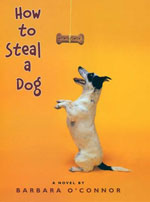
How to Steal a Dog by Barbara O'ConnorHow to Steal a Dog by Barbara O’Connor is a quick and powerful story that realistically portrays the reality of homelessness.

Georgina finds herself homeless when her father runs out, their family gets evicted and Georgina, her mom and her brother end up living in their car. But she sees a lost dog poster on a telephone pole and gets an idea—she’ll steal a dog and then claim the reward. An extreme situation prompts extreme action and Georgina makes some hard choices.

It’s not a happy-go-lucky story like the cover might make you think. The kid is homeless. She’s living in her car. She’s contemplating stealing someone’s dog and holding it hostage.

In short: It’s depressing.

Now the book isn’t a total downer (it is for children). It ends on a positive note. But it is rough, because being homeless is rough. Georgina faces it all, from struggling in school to losing friends to being ashamed of her dirty clothes and appearance. How to Steal a Dog shows how quickly things can fall apart and how homelessness is a reality for “regular” people.

Criss Cross is the Intersection of Lives and Nothing More

Criss Cross by Lynee Rae PerkinsThe book jacket description of Criss Cross by Lynn Rae Perkins doesn’t really tell you anything. There’s a reason for that. This book isn’t about anything.

“She wished something would happen,” it says right on the cover, and that’s about right.

The story follows several teenage characters with intersecting lives and it just hums along through ordinary days. You get slice of life stuff. Hector wants to learn how to play guitar. Debbie and her friend Patty change clothes after leaving the house but before getting to school. Lenny teaches Debbie how to drive stick. Debbie helps an elderly neighbor. Hector wants to ask a girl in his guitar class out, but she’s only got eyes for the football player.

It’s well-written and engaging, so I stuck with it, but there’s really no rising or falling plot. That can be interesting for what it is, but I like to have good writing actually go somewhere.

Jacob Wonderbar and the Random Capers Kids Love

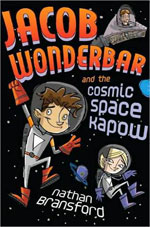
Jacob Wonderbar and the Cosmic Space Kapow by Nathan BransfordJacob Wonderbar and the Cosmic Space Kapow by Nathan Bransford is a boy-friendly space adventure story with plenty of wacky capers. Jacob is a troublemaker at school and he teams up with his best friends Dexter and Sarah for some non-stop fun, initiated when a man in a silver suit trades a spaceship for a corn dog.

Yep, that’s the kind of randomness you can expect from Jacob Wonderbar.

I thought it felt a little too directionless, but I read it aloud to Milo and he loved it. It’s turned into a series and I’m sure I’ll be reading the others to Milo.

Tonight at dinner for some reason he was talking about having children and Abby asked him what he would name his kids.

His answer? Jacob, Dexter and Sarah.

Sarah’s Key Explores the Vel’ d’Hiv Holocaust

Sarah's Key by Tatiana de RosnaySarah’s Key by Tatiana de Rosnay explores the Vel’ d’Hiv’ tragedy during World War II when French Jews were rounded up and ultimately sent to the death camps. It was by order of the German occupation, but carried out by French authorities.

The story is told from the perspective of a young girl rounded up with her family and also a middle age woman in 2003 researching the story as a journalist when she uncovers a personal family connection.

It’s a compelling story and engaging as the mystery unfolds, but I wasn’t completely engaged or rooting for the characters. Part of it is the intense nature of the Holocaust, but something about the disconnected French characters and the way the girl’s story eventually fell out of the narrative left me wanting something more.

But it is an educational moment, exploring the French complicity (and later guilt) and an element of the Holocaust I’d never heard about before.

Hattie Big Sky: Anti-German Fury on a Montana Homestead

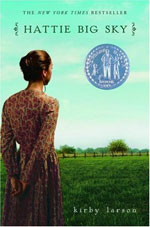
Hattie Big Sky by Kirby LarsonThe cover of Hattie Big Sky by Kirby Larson looks like something my mom would read, but it’s Little House on the Prairie with a plot and girl power. 16-year-old Hattie is an orphan who inherits her uncle’s homestead in 1917 Montana and works to prove the claim on her own. The timeframe puts the story in the middle of World War I and anti-German sentiment is brewing on the prairie.

It’s a simple story that weaves together several complex threads to make a satisfying whole that focuses on faith, country and the power of what you can do when you have the strength of friendship.

The anti-German fury is disappointing, but the historical reality is that we have a long track record of demonizing our enemy by persecuting our neighbors. It’s maddening and you’d think a country of immigrants would learn. But we don’t.

The homestead details are very reminiscent of Laura Ingalls Wilder, except of course it takes place nearly 50 years later, which gives an interesting insight into the Montana homestead experience. It also features a strong and young woman striking out on her own, which was based on a true story.

It’s a solid story that gives a full impression of a place and time, not leaving out the cold, hard realities.

Coaltown Jesus Hits Hope Instead of Hokey

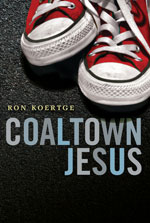
Coaltown Jesus by Ron KoertgeIn Coaltown Jesus by Ron Koertge, a teen struggling with his older brother’s death prays for God’s help and Jesus shows up in the sort-of flesh. Only Walker can see Jesus and he gets advice and insight like a guardian angel, only it’s on the odd matters like what girl likes him and how to score a pair of new sneakers. Or so it seems.

While Coaltown Jesus has the potential to be incredibly hokey, the offbeat, poetic style works. It should be kind of cheeseball and completely insulting. Instead it’s funny and light, while still managing to probe deep, painful questions and offer hope.

It’s also short and sweet, something you can read in one sitting.

Never Fall Down: The Cambodian Genocide

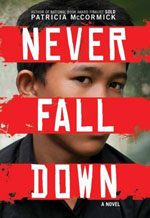
Never Fall Down by Patricia McCormickNever Fall Down by Patricia McCormick is a sparse and somber account of the Cambodian genocide in the late 1970s told from the perspective of a teenage boy, Arn Chorn-Pond.

It’s an immediate and straight-forward account told in his broken English, sometimes detailed and sometimes bare, like you’d expect from a child.

Citizens are rounded up and killed or forced into camps and Arn is forced into music and realizes it’s a way to survive. He’s eventually forced into service as a child soldier and later escapes to a refugee camp in Thailand. It’s brutal and the tactics seems non-sensical, which is about all I can make out after reading about the aims of the Khmer Rouge: Set up an agrarian-based society, keep out anything foreign, kill anyone with any form of education, knowledge or skill.

Their agricultural reform led to widespread famine.

Nevermind the genocide that killed anywhere from 1 to 3 million people, many found in more than 20,000 mass graves.

As brutal as the first half of the book is, it becomes a story of survival for Arn Chorn-Pond as he goes from camp prisoner to musician to child soldier to refugee to American adoptee. He had little or no help as he transitioned to American culture, something that’s hard enough for teenage adoptees today with all the counseling and preparation available, and without the horrors of genocide and guilt of being forced to kill as a child solider.

But it’s not all horror. Arn Chorn-Pond has gone on to become a humanitarian, founding multiple organizations and helping to preserve traditional Cambodian music and promote forgiveness and reconciliation.

All the Right Stuff Except for the Plot

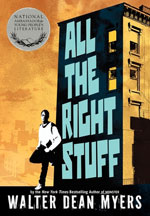
All the Right Stuff by Walter Dean MyersAll the Right Stuff by Walter Dean Myers is a Socratic dialogue about the social contract, the unwritten rules that determine our behavior, wrapped around the barest of plots.

I’m not a big fan of philosophy and I love a good plot, so this one didn’t do it for me.

In the aftermath of the death of his estranged father, Paul begins a summer job working in a soup kitchen. Elijah, the proprietor, quickly begins to teach Paul about more than chopping onions. They get into deep discussions about the social contract, the roles we play and why we do what we do. The debate becomes real as Paul mentors a young teenage mother who sees basketball as her only hope and is being recruited by a local gangster who doesn’t abide by the social contract.

In some ways it reminds me of Zen and the Art of Motorcycle Maintenance, with the philosophic conversation broken up by manual labor (in this case, preparing soup).

In the end it’s just a conversation. It’s all discussion and little action.

But I want a story that actually tells a story.

A work-at-home dad wrestles with faith, social justice & story.