Category Archives: Business & Marketing

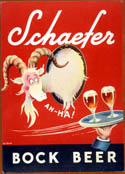
The Advertising Artwork of Dr. Seuss

Advertising artwork of Dr. Seuss - Bock BeerBefore becoming a ground-breaking children’s author, Dr. Seuss illustrated ads for a number of companies, including Ford, General Electric, Standard Oil, and NBC. The University of California San Diego houses the Dr. Seuss Collection, which includes examples of these advertising illustrations, and they recently scanned the collection and made it available online.

For more on Dr. Seuss’ career beyond his well known children’s books, check out The Secret Art of Dr. Seuss, Dr. Seuss Goes to War: The World War II Editorial Cartoons of Theodor Seuss Geisel, and The Seuss, The Whole Seuss, and Nothing But the Seuss: A Visual Biography of Theodor Seuss Geisel. (link via Jordon Cooper)
The Craigslist Introvert

The man behind the web phenomenon Craigslist is 51-year-old introvert Craig Newmark. His network of local portals offering personal ads, job listings, and other local-interest lists in 45 major cities worldwide is in the top 20 of U.S. portals, putting it with the likes of Yahoo!, MSN and AOL.

The shy celeb can’t write a personal ad (much less navigate that awkward social scene), but still puts a lot of stock in connecting people: “My feeling is that something connecting people to fix the world over time is the deepest spiritual value you can have.”

Once Upon a Millionaire

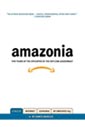
Amazonia by James MarcusStock options from Amazon.com make an editor filthy rich and the Internet bust makes him penniless again. Amazonia is the story of book reviewer James Marcus, who became the 55th employee at Amazon, hired to work on content. While there have been other inside tales about Amazon (Amazon.com: Get Big Fast, 21 Dog Years), you won’t find many written by a lowly once-millionaire editor. Read a review and excerpt (requires subscription or watching a short commercial) from salon.com.

Honesty in the Workplace

An on-your-honor bagel business gives surprising insight into the world of office crime, including a 15 percent drop in bagel theft after 9/11, followed by a similar spike in bagel theft during Christmas. Roughly 89 percent of bagel-eaters were honest, though a variety of factors influenced the pilfering: small companies were honest, telecom and law offices were not; a poor economy actually resulted in less theft, while a good economy saw more. (link via kottke.org)

President of Beers

Miller for President of BeersIf you’ve had the TV on lately you’ve probably noticed the tongue-in-cheek commercials from Miller challenging Budweiser’s “King of Beers” claim as undemocratic and announcing their run for president of beers. Only in commercials. The Miller ads featured debates between a Miller spokesperson and a Clydesdale to pseudo-comic effect.

But now Budweiser is coming back strong, challenging Miller’s presidential run by pointing out that their South African ownership makes them ineligible to run for president (U.S. presidents must be natural-born U.S. citizens). Budweiser fought back with commercials featuring the famous talking lizards and a donkey that originally appeared during the 2004 Super Bowl.

Both companies are now duking it out in court as well as in commercials. According to the beer blog Realbeer.com, there have been allegations that Budweiser distributors put stickers on Miller Lite products calling it the “Queen of Carbs” and “Owned by South African Breweries.”

While this hardly relates to Monkey Outta Nowhere, it is fun to ponder the potential gains or losses for such an advertising stunt. Rarely will companies so blatantly and aggressively target one another. While it’s possible customers will appreciate the humorous commercials that for once don’t feature bouncing cleavage, the childish bickering could just as easily turn consumers off. All this for beer.

Big Idea, Big Crash

Big IdeaIn case you never heard, everyone’s favorite computer-animated produce company filed bankruptcy last year. Big Idea, creators of VeggieTales, filed bankruptcy after trying to grow too quickly, not meeting projections, and losing a major lawsuit. Classic Media bought Big Idea in December and is trying to turn the company around by focusing on their success with half-hour video releases. A Snoodle’s Tale, a tongue-in-cheek Dr. Seuss adaption about self-worth releases tomorrow. (see “Putting Big Idea Back Together” for more)

But while the Veggies will keep on telling their tales, the company has gone through a radical change. Founder Phil Vischer talks about coming to terms with the crumbling dream in the Christianity Today article, “Running Out of Miracles” (coincidentally written by Bob Smietana, who I met at EPA a couple weeks back). Vischer has learned some insiteful (and painful) lessons about dreams.

Google: Don’t Be Evil

Last week search engine Google announced long-awaited plans to go public. The unconventional company is the first major dot-com offering since the technology bust. The IPO registration statement is full of interesting details, especially the opening “Letter from the Founders.”

The letter includes details about how Google plans to do business as a public company, which includes the principle “don’t be evil.” The letter goes on to say “We believe strongly that in the long term, we will be better served–as shareholders and in all other ways–by a company that does good things for the world even if we forgo some short term gains.”

Another guiding principle, “We aspire to make Google an institution that makes the world a better place,” may seem overly idealistic, but it’s a lot better than the corporate scandal that’s become standard.

Generation YME?

You know what I really dislike? Being categorized in an age bracket. Baby Boomers. Generation X. The Millennials. There’s all these strange, fluctuating categories of people roughly defined by the year they were born and a few stereotypical demographics like feeling a need to belong or rebelling against the status quo.

Rarely do they acknowledge that people are, for the most part, individuals. Also, they seem to forget that generations really don’t mean a lot anymore. After all, teens graduate from high school every year. The population is fairly fluid from seven months to seventy. There aren’t well-defined generations of people my age, people my parents’ age, and people my grandparents’ age. The result is that some of us are left out.

Like me. I was born in 1979. By most estimates I’m too young to be a Generation Xer, and too old to be a Millennial. So what the heck am I? Screwed? Or just an overlooked demographic, which really isn’t a bad thing.

Isn’t it great what broad social marketing trends can do?

Word of Mouth and Racism

Tonight in my Graphic Design class my professor was talking about a book he had been reading lately that related by tangent to design. The main point of the book was how small things can cause exponential change. It didn’t seem to make a whole lot of sense at first, but he shared a few examples from the book where something small caused a huge change.

The best example he gave was how New York City’s crime rate was dramatically reduced thanks to simple subway turnstile enforcement and painting over graffiti in the subway system. Those two minor improvements caused massive change.

Continue reading Word of Mouth and Racism

Marketing Characters

I never realized before how seriously companies take advertising. I was just reading an article about characters that sell products, like The Pillsbury Doughboy, the Trix Rabbit, Ronald McDonald and the like. Companies actually have books full of rules explicitly laying out what these characters can and can’t do. It’s really kind of frightening. They actually think about things like where the Lucky Charms leprechaun, Lucky, can be seen (only in the forest), and that a shot of the Doughboy from behind wouldn’t be very flattering. Somebody actually gets paid to determine what these stupid characters do. Most of these characters follow strict guidelines where the characters are almost always perfect. I think the best part is how these characters are failing. Think of the best character spokespersons. Who’s the best? The M&M guys? I think they’d get my vote. The ad agency doing the M&M ads decided to give the candies a little spunk. They bucked the trend and came up with enjoyable commercials. Now if someone could just do that for all those goofball characters selling cereal, we’d be set.