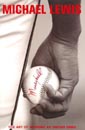
 Michael Lewis, who wrote Moneyball about the big money world of baseball, has a couple insightful comments for writers:
If there are problems it
Michael Lewis, who wrote Moneyball about the big money world of baseball, has a couple insightful comments for writers:
If there are problems it
A business writer and interview guru has written a rejection letter for rejection letters. It’s geared for today’s high unemployment job market, but imagine a tweaked version for writers.
And of course, my first attempt at following through on my new commitment probably isn’t going to go so well. With Abby starting grad school there’s also another component to keep in mind
Abby begins grad school tonight. This means a number of things for me, which of course prompt me to think and blog. It’s a one class per week program, so it’s pretty much guaranteed that I’ll be on my own Monday nights for the foreseeable future.
With that in mind, I want to take the opportunity to accomplish something. I want to devote my Monday evenings to writing and reading. I’m going to say both because I won’t want to write every Monday, and I’m sure I won’t last writing all evening. Reading will be a welcome
 It always helps to sharpen your tools as a writer, and what better refresher than a new tool to review (or learn) every week for 50 weeks? Roy Peter Clark of the Poynter Institute is offering 50 writing tools, available online or via e-mail. Check ’em out and improve your writing today. (link via bloggedy blog)
Circumstances have conspired against me and I won’t be sacrificing 58 hours of my weekend to writing the great American novel. My schedule has gotten a bit difficult on multiple fronts and I won’t be able to swing it.
However, I still want to give it a shot. I’m purusing the calendar for a semi-open weekend, and I hope to get it in between now and the end of June. If I put it off beyond then it probably won’t happen. Thanks for everyone’s comments and support. When you’re committing to such a crazy idea, it really helps to have some backing. So I hope everyone gives Jeremy a boost, a man with more guts and possibly more free time than I. Of course Jeremy won’t be trimming lilac bushes this weekend, so you can imagine who’s having more fun.
I have some kind of love affair with books, and this whole writing for an entire weekend idea just thrills me. The other night we went to Barnes & Noble for no particular reason (like we always do) and I just loved looking at all the books. Sometimes I wish I could get paid to just sit around and read books. I get paid to do that now, but it’s really crappy pay. I wish I could get paid boatloads of money to just read books, to the point where I would literally read a book a day. That’d be awesome. I have such a curious nature and a thirst for knowledge that there’s so many books I want to read. Yet I have so little time.
And adding my own book to the pile is a dream I constantly go on about. I’m currently stoking two little fiction fires, one of which I’ll probably butcher with my upcoming 58-hour writing spree. Putting off that spree gives me a little time to let the ideas simmer and figure out which one I want to tackle.
The first idea has been with me longer, and is basically a teen drama. It involves a couple teens struggling with love, faith, acceptance, life — the litany of things teens have to deal with. The teen years can be so dramatic, and I really empathize with those years. There’s so much passion, and everything is more important than it really is.
The second idea came to me while driving across the country, and it’s a much different novel. It’s basically a home-grown terrorist story, which is kind of weird because I half expect the FBI to come knocking on my door. The idea started because after 9/11 I thought of way too many ways a terrorist could inflict mass panic and death. I won’t publish those ideas for a lot of reasons, but they really made me think. This story basically involves a Fundamental Christian taking his beliefs to the extreme. It’s going to involve a lot of explosions, conspiracy, sex, and that open-road, drifter mentality. A lot of this story is going to come from the many miles I’ve driven between Detroit and St. Paul. This idea isn’t as well thought out, and I already know the biggest weakness is in making my “Fundalet” character unsympathetic and typecast. That’s easy to do, but it makes for a boring story. I need to find a way to make people (myself included) really care for the character. Of course feeling sympathy for a psychopath is never easy. Seems like there are probably a few movies that do that well.
So those are my ideas. Hopefully I can subject them to a 58-hour butcher job soon.
The Great Mahakali Write-a-thalon (think triathalon) is next weekend (link via Kottke). It’s a contest where writers have 58 hours (basically a weekend) to write a novel. The prizes are pretty vague, but it amounts to exposure and the satisfaction of writing a novel.
For some reason I’m intrigued. I’ve always wanted to write a book (and if you read these thoughts with any regularity you’re probably sick of me saying that) and writing a novel would be even better. I know the day I publish a nonfiction book (which seems easier and more commercially viable) I’ll revise my goal and say I’ve always wanted to write a novel. Not that I have any practice at it. I just want to do it.
Of course the usual factors always tear me down. I don’t have the time to sit down and write a novel. I haven’t come up with an idea I think is novel worthy. More than anything, I’m afraid.
I’m afraid of spending hours on something that doesn’t go anywhere. I know enough about writing to know you can work and work and work and sometimes all you’ve got is crap. I’m also afraid of committing to an idea. I never know if it’s good enough, if it’s strong enough, if it’s an idea that can carry any weight. I’m afriad I’ll write a phone book’s worth of pages before I can even know if the idea is any good. So rather than fail, I don’t even try.
But I know the lesson can’t be never try. One of these days I’m going to have to take a so-so idea and force it into a novel. Even if it’s the crappiest novel ever, I could say I’ve written one. I think I’ve even said that before in a similar ‘ooh I wanna be a writer’ entry. Yep. Anne Lamott recommends writing shitty first drafts, and maybe that’s what I should do. I kind of like the idea of forcing a novel out and then having to bury it in the backyard like radioactive Hemmingway.
So with all those thoughts you can understand why the idea of a 58 hour write-a-thon sounds appealing. Take a single weekend and give it a shot. Why not? It’s only one weekend. With enough caffiene and Radiohead I could probably crank out something worthwhile. Maybe it will only half-suck. But at least I could give it a shot, right?
Of course all the responsibility has a say. I was thinking of borrowing a friend’s truck and hacking back my rabid lilac bushes next Saturday. My lawn-addicted neighbors are getting to me. Abby’s also having a sleep-over with the girls from our youth group, which means I’m out of the house Friday night. The contest also officially begins Friday morning (9:00 a.m. Friday to 7:00 p.m. Sunday), which means I’d have to sacrifice a day of work.
So many excuses. I could always shorten the contest or change the hours and do it my own way. I could always raise support to make up for a day of no work (as if that’s effective). I could always auction the resulting novel to the highest bidder. It’d be like a crapshoot — is it radioactive Hemmingway or just so-so?
Of course if I am going to give it a shot I’d better decide on an idea so my brain can be percolating. The contest forbids pre-writing, but they can’t stop you from thinking about your novel ahead of time. I have a few ideas in the drawer I could fall back on, or I could develop some brand new half-baked idea. So many possibilties.
It’d be even better to post the novel here. Maybe even as I write it. I could start a different contest, a read-a-thon! You have 58 hours to read a novel written only hours before. Of course that would kill any chance to edit my suckiness. Or I could just post the novel in chunks after it’s all said and done.
I’ll have to think about this one.
One more thought: how come I never come up with normal schemes? Like getting a job or buying a car. It’s always something crazy like writing a novel in 58 hours or running an online fundraising drive to buy a computer. Sigh.
I’ve been working on a book editing project for the past few weeks, and as you’d expect, it’s making me think about writing my own book.
I’m seeing a new aspect of the book publishing process as I’m basically taking a manuscript and editing it for flow and understanding. I’m supposed to not worry about style and copy editing things like improper hyphens and passive voice, but I can’t help myself. Of course the fun part about this project is what I’ve talked about before — there’s so much I want to say but I need to be careful.
Part of what’s making me think is I’m realizing exactly what publishers deal with. The manuscript I’m reading is good. The guy’s got great stories, a good message, and he packages it all fairly well. But it’s far from perfect. I’ve done quite a bit of reworking, re-writing, and editing. Part of this is because the guy’s not a writer. He certainly writes better than a lot of folks, but he’s no writing major (gosh, that sounds arrogant — sorry).
There’s all sorts of little things I keep tweaking. Then I wonder if I’m being anal, and I think I should stop and let someone else do it. Then I think about no one else doing it and the book being published as is. That makes me cringe, so I go for anal.
That’s another freaky thing, the book being published with errors. So many books are published every year, and I wonder how many of them probably shouldn’t have been published. Like anything else, publishing is a business, and not everyone is out to make the best of all books. Some people just want some cash. And that means a lot of crappy books.
I keep comparing what I’m working on to something by Anne Lamott or Annie Dillard, where you can tell every sentence and phrase has been hand-crafted, fine-tuned, and perfectly tweaked. Not every book needs to be written by a Pulitzer-bestowed author, but I wonder how many books out there could use a good re-write. I keep stopping at a paragraph and thinking how I’d react to a particular sentence if I were reviewing the book. Sometimes it makes me paranoid, thinking the book needs a complete overhaul. Then I get a grip and realize it’s pretty good. There’s just such a permanance to the printed word, more so in a book than a magazine article, and I wonder if I’ve worked hard enough.
I also wonder about how this book came to be. As I rearrange chapters and talk to the author, I’m quickly realizing this book came together over several years and has probably existed in several different forms. It might have been a seminar, an article, a sermon, a curriculum. Now it’s being told and packaged with other pieces, a little glue to hold it all together, and there you go.
I don’t mean to belittle the author I’m working with, but all of this makes me wonder why I’m not writing books. Some of the quotes and stats used in the book are the same quotes and stats I’ve gathered. And I’ve written articles. How close am I to pulling together a few related pieces and being half way to a book? Then again, I’m the writer, not the expert.
Maybe it’s yet another billboard screaming to me that all my fears and apprehensions mean nothing. Write a freaking book, Kevin.
My alma mater is doing one of those alumni bulletin board things for the English Department, so I had to answer a few questions. Partly because it seems helpful and partly to justify the time spent on it, I thought I’d post it here. It’s probably most helpful to aspiring writers in college.
1.) What do you do?
I stay home, sit at my computer all day, and pretend my typing, e-mailing, and web surfing is a real job. I actually just launched my own freelance writing and editing business, Monkey Outta Nowhere. I write articles for magazines and web sites, copy for brochures and postcards, e-lists and blogs for businesses, and edit magazines and books.
2.) Why did you choose to be an English Major?
All I ever wanted to do since writing a book about my cat in my first grade class was write. I’ve never wanted to do anything else, so a Writing Major seemed to make sense. I’ve strayed into more editing than writing in my career, and that’s where other interests have helped, including a minor in Art.
3.) Do you feel your English Major has contributed to the skills needed in your current occupation? If so, how?
Absolutely. I write every day, which was a skill fine-tuned in the writing program. Without the confidence to know I can write something, I wouldn’t be able to tackle anything I do. Of course a program alone isn’t going to make you succeed. There’s plenty of practical, real world experience you need, as well as a healthy curiosity about the world. While Bethel didn’t necessarily provide those, I did find them while I was there.
4.) What was the process you went through to get the job you have now (i.e.- how did you make the move from Literature to what you are doing now)?
In high school I edited my youth group’s newsletter, I edited the Table Tent for two years, wrote a handful of free articles, and landed an unpaid internship with a national publisher after my sophomore year. I edited their web site for the next three years, wrote a trail guide for the National Park Service, and racked up a few more free articles. Two weeks after graduation and five days after getting married I went to work as an assistant editor in the Internet Department of the Billy Graham Evangelistic Association (BGEA). My prior experience got me in the door, and the two and a half years I worked there gave me much of the experience that’s helped me today. In July 2003 the BGEA relocated to Charlotte, North Carolina and I became unemployed. I looked for a job for four months without finding anything. Then the freelance work started coming in and I stopped looking for a job. Two months later the freelance jobs slowed down and I realized I needed some help. I took some small business classes and learned how to do this for real. As of today, I’m still at it.
5.) How has your English Major had an impact on your personal life (outside of work experience)?
I think I’m more inquisitive. I love to read (usually average 40 books per year — it’s easier when you’re out of college, trust me). Being a writer is often about telling stories, whether it’s fiction or a news blurb, and that requires a certain amount of curiosity. I’ve also been writing a blog for over five years, which I started simply to keep me in the habit of writing. That’s a big part of my personal life now, as dorky as that sounds.
This is the kind of advice I always feel like sharing, but I’m never sure where it fits. So here goes…
Top 5 Suggestions for English Majors (in no particular order):
1) Just because you’re a writer doesn’t mean other subjects aren’t important. I’m kicking myself for my appalling lack of business knowledge, something one or two general business classes would have helped immensely.
2) Network, network, network. 95 percent of the jobs I get come through contacts I’ve cultivated throughout the years. This is how most people find their full-time job.
3) Get published. It can be the Clarion, the Coeval, the Table Tent, or your own web site — just get published. As you get into the writing world you need to have examples of your work, and the piece you wrote for class or the story hidden in your drawer don’t count. You might not get paid, but that’s how it works. Editors want to see published clips not because they question your skill (that’s easy to judge) but because they question your experience.
4) Learn it now. You’re paying (or someone is) a whole lot of cash to get a good education — make sure you’re getting it. You may hate grammar, but it’s a lot easier to ask the prof to explain effect and affect than to have to figure it out on the job. If you stink at interviewing, take the time to learn now. It’s better to blow the interview with the Market Square chef for the Clarion than to blow the interview with Mel Gibson about The Passion.
5) Know yourself. It sounds cheesy, but it really helps to know your strengths and weaknesses — both professionally and personally. Despite my messy desk, I crave organization, which explains why I’m good at setting up a publication schedule. I’m also an introvert, which means an all day convention is going to wear me out and I’ll want to be alone in the evening (knowledge that has helped my marriage tremendously).
 Seems like I’ve rambled about this before, but some random guy (link via kottke) was talking about the ability to be your own publisher. He took a public domain book, found a version online, and made his own edition of the book on Cafepress.
There’s all kinds of fun you could have making your own version of books. I can imagine doing a fun library series of stuff — though I suppose finding public domain books might be a little difficult (and if everyone got on the bandwagon it wouldn’t be so cool).
But as a writer the real fun part is the ability to be my own publisher. I could publish a book and only have to put the creation and production time into it. That’s my only investment. The general consumer could order my books one at a time and you avoid the hassle of the publishing industry’s advances and unsold copies and all that. It’s a perfect solution for low-demand books.
It really makes me think about FX-77 Spacefighter.