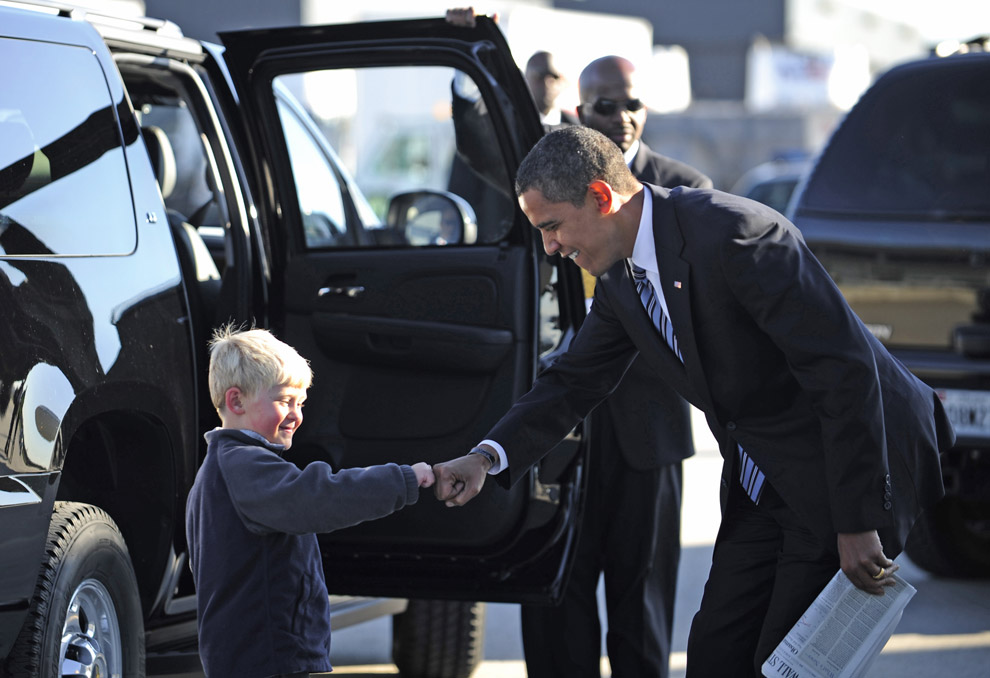
So presidential terms are fascinating and I like the idea of promising to be a one-termer. The other idea I find fascinating is what happens to presidents after the White House? Most former presidents retire quietly and busy themselves with humanitarian projects.
We’re not a monarchy or an empire, so that’s probably a good thing.
Post-Presidential Politics
Only three presidents that I’m aware of continued their political career after office (at least on a national scale):
William Howard Taft served as Chief Justice of the Supreme Court for nine years.
Andrew Johnson served four months in the Senate, his term cut short by a stroke. (Serving with the same senators who voted for his impeachment? Awkward.)
John Quincy Adams served 17 years in the House of Representatives and effectively had a second career as an abolitionist.
Adams is the most interesting case in this list of presidents who bucked the trend. He embraced the abolitionist cause and some have argued that he did more in Congress than he ever did as president.
It’s probably not a coincidence that all three served single-term presidencies and were defeated in their reelection bids. I imagine they had a sense of something to prove (definitely the case with Johnson, Adams seemed to have a mission, and Taft always wanted to be chief justice).
Any Current Takers?
I wonder if any current former presidents could pull this off? It seems like it’d be pretty easy for a former president to win (maybe that’s part of what makes this idea unseemly and why so few have done it). Seems like George W. Bush could take Texas and join the Senate. And as reviled as Barack Obama seems to be by half the country, he could easily nab Chicago’s district and take up a seat in the House of Representatives.
While John Quincy Adams served in Congress he met another congressman from Illinois who would go on to be president.
I can’t see any current former presidents actually doing it though. With the exception of George H.W. Bush, the rest are all hated so much by the opposition that they’d be a constant distraction. But it’s interesting to think about.
We don’t need a country of ruling elites (more than we already have), but I’m also intrigued by the example of Adams. Continuing to serve in the name of an important cause is a good reason to buck the trend.
Random Fact: Ever the contrarian, John Quincy Adams was sworn in as president with his hand on a book of constitutional law as opposed to the more traditional Bible. Imagine the uproar if someone tried that today?
So I think watching history unfold is captivating, especially when it comes to presidential politics. Yesterday I recounted the numbers on presidential reelection. Today I want to talk about a fun strategy.
The other night I couldn’t sleep and a political strategy came to mind. We seem to be stuck in an era of gridlock, where politicians are always angling for the next election. They’re focused more on staying in office than getting anything done.
So what if a presidential candidate promised to serve only one consecutive term?
They run for president and promise not to run for a consecutive reelection. Assuming they can stick to their promise, that means they have four years in office with no need to worry about reelection. Suddenly the first term is not about ensuring a second term. Their last year isn’t mostly lost to distraction while they run a presidential campaign and the country at the same time. Let the candidates squabble through the debates while the president remains presidential.
The American people get a more focused president. And the president would have the option of running again for a second, non-consecutive term (without the “loser” stigma). If they were a well-loved president and enjoyed doing the job, they’d have a great shot at reelection down the road.
Turning Down the Job
It rarely happens in U.S. history that a president decides not to run. It’s happened seven times.
Three times a president served a single term and did not run again:
James Polk. He campaigned with a promise to only serve one term and historians say it kept him focused on actually accomplishing stuff (of course he died 103 days after leaving office, so his post-presidential career was quite short).
Rutherford B. Hayes. He also promised not to run for reelection, though his initial win was clouded in scandal. He worked for social and educational reform in his retirement.
James Buchanan. He also declined to seek reelection, though that probably has more to do with his incredible lack of popularity as the country descended into the Civil War. More than a principled stand, he was saving face.
Four times a president served a partial term when their predecessor died, were elected to second terms and could have run for third terms but did not: Theodore Roosevelt, Harry Truman, Calvin Coolidge and Lyndon Johnson (though Roosevelt ran for a non-consecutive third term but split the ticket and lost).
It’s rarely been done in U.S. political history. Most presidents either served two terms or served only one and lost their re-election bids (or died while in office). It seems like two non-consecutive terms could be a way to accomplish more and save face politically (a former president could always gauge the popular opinion and have a good idea of their chances before running for their non-consecutive second term; and there would be plenty of reasons to opt out and not run again).
The One Exception
Grover Cleveland is the cagey president who pulled off the two non-consecutive terms. These days losing an election means you don’t get to try again (John McCain, John Kerry, Al Gore, Bob Dole, George H.W. Bush, Michael Dukakis, Walter Mondale, Jimmy Carter, Gerald Ford, etc.).
But Cleveland pulled it off. It’d be like Jimmy Carter going up against Ronald Reagan in 1984 and winning, or George H.W. Bush against Bill Clinton in 1996 and winning; it’d take a special set of circumstances to work. And that’s really what Cleveland had. He lost the electoral college in the 1888 election but won the popular vote. When he moved out of the White House his wife told a staff member to take care of things because she’d be back in four years. She was right.
So maybe Al Gore coming back in 2004 to challenge George W. Bush would be a better comparison.
Run On a One-Term Platform
Limiting presidents to a single, six-year term is another idea that’s often discussed. Though I like the idea of presidents having another shot and giving the people a chance to weigh in.
But I think promising to run for a single-term would be powerful in our election-mad times. It immediately puts the single-termer above the fray. They’re here to do business. It’s bold. It’s different. And maybe it’s crazy enough to work.
Now which politician is going to be patient enough to walk away and wait four years before trying again? Which politician is going to be bold enough to make that kind of promise in the digital age and stick with it? Which politician is going to realize that this plan would effectively lengthen their time in the spotlight?
I’m hardly even an armchair political spectator, but there is something about presidents, political power and history that’s fascinating. Presidential election years tend to kill my productivity because I want to hear the latest news and get the latest insights on what could happen (even when nothing is happening).
Watching history unfold is captivating.
So I’ve got some random thoughts on presidents and who gets reelected. But first, let’s look at the numbers on presidential reelection.
There’s a tendency to think of one-term presidents as failures. (Somehow being elected President of the United States once isn’t good enough.)
Two terms is the standard, exemplified by George Washington and only ever broken by Franklin Roosevelt on the brink of World War II, which brought on the 22nd Amendment and the two-term limit (though Ulysses S. Grant tried for a non-consecutive third term and was nearly nominated).
But the numbers look a little different:
16 presidents were elected to two terms (or more, thanks Franklin).
9 presidents were elected to one term and lost their reelection bids (these would be the guys we think of as failures).
7 presidents were elected to one term and did not seek immediate reelection (3 were simple single-termers who didn’t run again; 4 had succeeded to the job and served a partial term, were then elected to another term, but didn’t run for a third term. Until Theodore Roosevelt tried for a third, non-consecutive term, but lost.)
5 presidents succeeded to the presidency and never won an election.
5 died before getting a chance to run for a second term, so it’s hard to know if they would have made two-term presidents
Only 1 president escaped the failure club by losing reelection but then coming back to win four years later and end up serving two non-consecutive terms. (Grover Cleveland forever complicated presidential math because we count him twice; Barack Obama is the 44th president, but the 43rd person to have the job.)
I don’t know what those numbers really tell you, other than the fact that lots of presidents have only served one term. 14 of them served a term and lost reelection and 7 more opted not to run again (maybe because they’d lose?).
The United States Postal Service has been an easy target of late. Last year they announced a $15.9 billion loss. This year they announced the coming end of Saturday service. The jokes never seem to end as people bemoan every bad experience they’ve ever had. Everyone thinks they can run it better. Everyone thinks it needs to privatize. Or get with the times. We send email for goodness sake.
It’s kind of annoying. I like the post office. Which is why this Esquire article is worth reading.
Nobody seems to understand that this isn’t entirely the fault of the United States Postal Service. The last time the USPS was in the black? 2006. Not so coincidentally, that’s when Congress forced the USPS to pay off 75 years worth of future retiree’s benefits in the next 10 years, something no other government agency has to do and something most private companies would spread out over 40 years or more. The result? 70% of the USPS’s loss last year—$11.1 billion—came from these future health care payments.
A $4.8 billion loss is still something, but it’s a lot more manageable out of a total budget of $81 billion. It’s not quite as dire.
The reality is that for all the complaints about the United States Postal Service, we forget what it really offers.
It connects everyone in the United States like nothing else. You can deliver a letter from one end of the country to the other for the same price as sending it across town. You can literally reach anyone in the country. The Postal Service is required to get the mail to people, even in rural areas, where Fed Ex and UPS rely on the Postal Service to go that last mile. Continue reading Connecting a Country: Don’t Slam the Post Office→
Presidential election night is such a nervous, glorious mishmash of emotions. I can think of no other event when something so big is decided so quickly. Sure, the election drags on forever, but despite the polls you never know for sure who’s going to win. Then everybody votes, we tally ’em up while some talking heads blather on, and it’s decided (usually: thank goodness for not repeating 2000). Done. The next four years are in place. History is written.
It’s big.
I have a hard time getting anything done on election day (that’s why I turned to a distraction). Even today I’ll need to process for a while (and I’m doing that here… get ready for a long post). Continue reading 2012 Election Reflection→
In the midst of the political season I find myself wavering between complete fascination with the political process and utter dread that it will never be over. Facebook usually only encourages the latter, but earlier this year I noticed something interesting. I recently found my long lost high school writing teacher, Janice Mekula Golding, on Facebook. When she wasn’t posting about glorious retirement in Grand Traverse County, Michigan, she was talking about going door-to-door and canvassing for the election.
A political door knocker? Yikes. I hate it when those people come to my door.
But then I started wondering: Why does she do it? Does it actually work? How many people actually listen and how many slam the door? Seemed like an opportunity to learn a bit about the world of volunteer political campaigning. I found it fascinating and encouraging. Maybe next time I’ll actually listen to the political campaigner who knocks on my door.
OK, let’s start with the basics: Who are you going door to door for? How often have you done it?
Janice Mekula Golding: I’m currently going door-to-door for the Democratic candidate for Michigan House in Grand Traverse County, a peripatetic little Energizer Bunny named Betsy Coffia. I got my training in 2007-2008 as a full-time volunteer for Barack Obama in 13 states, where I probably knocked 200 to 400 doors per day, 10-15 times per month. My current campaign has held a canvass at least every other week since June, with a different purpose each time.
Why? Why door knocking as a political strategy?
Janice: Door-knocking is as old as campaigning itself, based on the principle that one smile is worth a thousand brochures or a hundred phone calls. The benefit of the personal testimonial is well known in advertising. If your neighbor raves about her new dentist, you’ll be more likely to go there than if you read about it on the Internet.
What does it look when you’re going door to door? What do you say to people? What are you hoping to get them to do?
Janice: The experience of going door-to-door varies from day to day, depending on the neighborhood and the campaign objective. A new candidate will need to gauge and/or establish name recognition: “Hi, I’m Jan from over in the Old Mission neighborhood. Have you heard of that awesome new woman who’s challenging Wayne Schmidt for State Rep in our district?” We record the answers on a check sheet to be entered into our computer database for analysis and appropriate strategizing. Another canvassing session may concentrate on determining which issues are most important to voters, and clarifying our candidate’s position on those issues, even offering to research the topic and report back or have the candidate give the voter a call (in a small, local race). Later in a campaign, the goal is ensuring that our friendlies are registered and know where and when to vote. In training, we emphasize to our volunteers that door-knocking is merely sharing our enthusiasm and personal stories with neighbors (or fellow concerned citizens, if we’re out of our own locality). Often, the most effective political strategy is simply to listen. Believe it or not, most people are receptive or at least polite. Especially when it’s raining.
Is this actually effective? Are you changing people’s minds?
Janice: This technique can be highly effective, if organized correctly. Preparation and training are key. If the campaign has access to a database of voter information, certain demographics can be targeted in advance (registered Democrats or Independents, age range, those who voted in recent primaries, those who pledged to vote for us, etc.). Volunteers must be familiarized with the candidate’s background and positions, the objective of the particular canvass, and principles of safety. Often, a canvasser’s job is not to change minds, but to disseminate and collect information.
Janice: Door-knocking horror stories abound, from unleashed dobermans to unleashed racists. One of my colleagues was tackled to the turf by a 6-foot tumbleweed in Butte, Mont.! My personal favorite was the home sporting a poster of gun sight cross hairs reading, “If you can read this—you are in range.” Needless to say, I backed off that porch. Slowly. With my hands up.
What was your best door knocking experience?
Janice: Best experiences? I couldn’t pick just one! From the Massachusetts voter who left me with a bag of Granny Smith apples and a home-baked pie, to the disabled man who told me tearfully that no candidate had ever sent a canvasser deep into his wooded cabin to ask his opinion about handicap access problems in Keene, N.H., to the Texas senior citizen with an oxygen tank at her side, a lit cigarette dangling from her lips, and a hyper-kinetic poodle who liked his dog biscuits pre-chewed, door-knocking is one of the most rewarding and humbling experiences of my life. (And yes, I did pre-chew. Hey, she was busy filling out her absentee ballot for Barack Obama.)
What has all that door knocking accomplished?
Janice: What have all of our blisters accomplished? Well, Betsy Coffia went from a social worker with a 4.5 percent name recognition to the landslide winner of the Democratic primary, over a candidate backed by the county Democratic Party. And oh yeah—there’s that guy in the big house on Pennsylvania Avenue…
With the election just days away I’m getting lost in the many fascinating layers of presidential politics. Two are especially fun: the possibility of a tie and the way the electoral college works.
It’s a Tie!
First up, the New York Times has a neat little map showing the 512 possible outcomes in the presidential election based on nine battleground states (don’t you just love how the other 41 states are a foregone conclusion?). Of those potential paths, 421 lead to an Obama victory, 76 to a Romney victory and five to a tie.
That’s right, all this campaigning and we could end up with a tie.
But don’t worry, the 12th amendment addresses such a possibility. The House of Representatives gets to pick the president (but with an odd, one vote per state delegation rule) and the Senate picks the vice president. Based on which parties control which chambers, we’d most likely end up with President Mitt Romney and Vice President Joe Biden. Now there’s a wacky pair.
But the 12th amendment isn’t actually that simple. It not only speaks to a tie, but a case where no one gets a majority of the electoral votes. This scenario happens when there are more than two parties winning electoral votes. It’s only happened once in history, 1824, when Andrew Jackson received 99 electoral votes, John Quincy Adams got 84, William H. Crawford got 41 and Henry Clay got 37, all shy of the 131 needed at the time. Based on the complex rules of the 12th amendment, the top three electoral vote getters can be considered by the House, so Clay was out. He threw his support to Adams, and the House eventually elected Adams as president.
Upside Down Victory
Which brings us to the other wacky issue with our presidential election system: the details of the electoral college. As you probably remember only vaguely, the president is not chosen by a simple majority of citizens, but by the electoral college, a bizarre quirk of representational democracy where we don’t vote for a candidate but for people who will vote for a candidate. It’s left over from the days when we didn’t trust the common citizen. Hmm…
Each state has a certain number of electors and the winner of a state gets all the electoral votes for that state. It’s all or nothing. Which means the popular vote is practically meaningless. This is where it gets crazy.
A fun little video details how the electoral college works and showcases that someone could win the presidency with only 22% of the popular vote. All it takes is winning in a bunch of small states by a single vote. That’s right, more than three-fourths of the nation could vote against someone and they could still win the presidency. Watch it for yourself:
But surely that won’t happen, right? As the election of 2000 has shown us, anything can happen. Thankfully, we’ve been through it in recent history and the country didn’t come apart at the seams.
What About Popular Vote?
Oddly enough, we also weren’t motivated to change our system. Frankly, it seems like a straight popular vote might be simpler. It sure would have made social studies class a lot easier. It also might result in more equitable campaigning with candidates visiting all states and not just the swing states. The National Popular Vote Interstate Compact is one attempt to do away with the popular vote over the electoral system and the Wikipedia article includes plenty of pros and cons. The method they use is even more complicated though, relying on the fact that state legislatures decide how their electoral votes are cast, so the compact says that when a majority of states sign on, they will assign their electoral votes based on the popular vote, regardless of the result in their own state. Seems like it’d be easier to just pass a Constitutional amendment, like the Every Vote Counts Amendment, though it doesn’t seem to be going anywhere.
Sheesh. Presidential elections are way too complicated. Is it Tuesday yet?
I’ve tried (at length) to write about the marriage amendment in Minnesota without success. I did manage to write about how their language offends me (since then I’ve seen ads touting “real” marriage?!), but I haven’t written directly about the amendment. I’ll try now (and it’s my last “here’s where I stand” post of the election cycle, I swear).
For all the articles I’ve read and back and forth arguments I’ve considered (enough to make your head spin), I think this is the strongest issue for me (and it stands regardless of your views on homosexuality).
“This is not an amendment to Christianity. It is an amendment to the Minnesota State Constitution. We live in a pluralist society, not a theocracy. So while it may be important for Christians to debate Christian perspectives on marriage, it is not fair to force all Minnesotans to have the same ideals. Whether we like it or not, not all Minnesotans are Christians. Forcing religious ideals on non-believers is a violation of the separation of church and state. And, to use Alexis de Tocqueville’s words, it is a tyranny of the majority. What happens when the majority of Minnesotans are no longer Christian? Are we willing to accept the precedent this amendment sets – that the dominant religion can force their beliefs into law? If not, we suggest voting NO.”
Thank you for putting words to the argument I’ve been having in my head for the last decade.
I think it’s sad that this whole issue is about protecting the sanctity marriage from people who want to get married. Meanwhile few are protecting the sanctity of marriage from the ones already married and getting divorced. If you want to be pro marriage, put your effort into helping marriages, not passing laws.
My usual disclaimer: I’ve been leery to discuss politics this year, mainly because I’ve seen a lot of people I once respected making fools of themselves on Facebook. I don’t want to be that person. So I’m trying to talk politics without being a jackass. Hopefully I’m getting there.
In 2008 I explained why I was voting for Barack Obama. I wish I’d written similar posts in 2004 and 2000. Though it’s entirely possible I was so unexcited about candidates in those elections that I wouldn’t have bothered.
Before going any further, it’s worth pointing to my 2008 post, Here’s Where I Stand: Let’s Disagree Well. Part of why politics is so caustic is that we fail to recognize where we stand on issues. If you’re socially conservative and I’m socially liberal, of course we’re going to disagree on a lot of social issues. Instead of getting mad over statements about specific policy stances, sometimes it’s easier to recognize those underlying positions and just agree to disagree.
Which is why these discussions are hard and tend to turn people off. In some cases there’s not a lot to discuss. But I do think it’s important to talk about where we stand and why. To explain our position. To exercise our democracy. And to hopefully do so in a humble and respectful way. That’s the foundation of everything we hold dear.
I’ve been so leery of discussing politics this year that I’ve hardly said anything. That’s probably a little extreme as well. We need to learn how to discuss politics in a way that doesn’t resort to Facebook jackassery. I’m trying to learn how to communicate about these touchy issues in a way that’s actually useful. I hope you can cut me some slack.
Minnesota has two amendments on the ballot this year: anti-gay marriage and voter ID. I’ve said my piece (sort of: no!) on the marriage amendment. Now let’s talk voter ID.
In general, I’m not a fan of voter restrictions. I think it should be easy to vote. I’m proud of the incredible voter turnout in Minnesota (77.8% in 2008, best in the nation by far). Restrictions on voting smack of poll taxes and all the sleazy efforts to suppress the vote during the civil rights era.
However, I don’t think it’s unreasonable to ask people to verify who they are when they vote. Showing some sort of ID, provided we make accommodations, doesn’t seem like a ridiculous restriction.
So I’m willing to consider voter ID.
Unfortunately, the amendment being considered in Minnesota doesn’t do a good job. It doesn’t really do anything. It doesn’t answer any questions or spell out how our new voter ID system will work. The amendment leaves that job to the legislature.
So when both sides argue about what the voter ID amendment will or won’t do, they’re wrong (unless they tell you we don’t know). The pro-voter ID folks give all kinds of lovely answers about how issues will be addressed. The problem is they’re basing their answers on legislation that was vetoed. We don’t really know how voter ID will be implemented or what kind of reasonable accommodations will be made.
All we’re doing is voting whether or not somebody else should decide. Since we don’t know what they’ll decide, I’d rather have no voter ID than bad voter ID.
Here’s a video from MPR explaining exactly that. It struck me as incredibly biased toward anti-voter ID until I realized they didn’t say a word pro or con about voter ID itself. They’re merely explaining exactly what the amendment does and doesn’t do. That’s more than the campaign sites have done, so hats off to MPR.
So I say vote no on voter ID. If we’re going to have voter ID, let’s make sure we do it right. Let’s not force ourselves into it and possibly muck it up.
What do you think about voter ID? Have you ever had problems voting?
A work-at-home dad wrestles with faith, social justice & story.